From The Grimoire
Savour the Delicious Flavours of Samhain: Amazing Feast Recipes!
Samhain food is proper autumn comfort: soup, roots, apples and the sort of warmth that makes a dark evening feel less like a personal attack.
Table of Contents
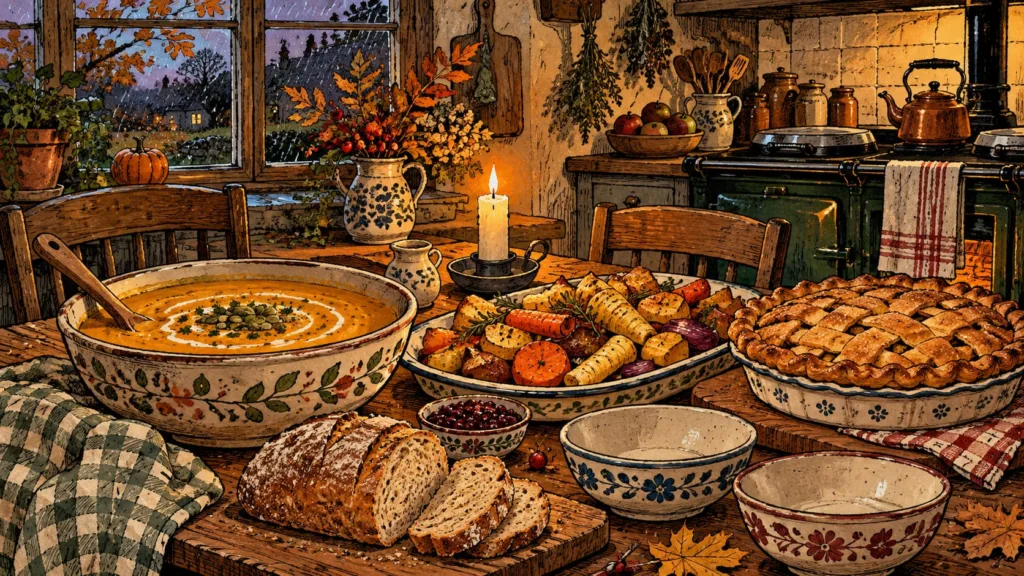
Samhain food is proper autumn comfort: soup, roots, apples and the sort of warmth that makes a dark evening feel less like a personal attack. It is also one of the easiest ways to make the season feel meaningful. A meal gives you a reason to slow down, notice what is in season, feed the people you love and remember the people you miss.
Historically, Samhain marked the end of the harvest and the beginning of the darker half of the year in Gaelic tradition. Modern witchcraft draws on that seasonal threshold in many different ways, so there is no single correct Samhain menu or ritual. A quiet bowl of soup after work, a noisy family tea, a pie shared with friends or a more formal ancestor meal can all belong to the season.
Think of this as a guide to building a Samhain feast that works in a real home, with a real budget and real people in it. The magic is not in making everything look perfect. It is in the care, gratitude and attention you bring to the table.
Food at Samhain: harvest, hearth and the darker half
At Samhain, the emphasis is on harvest, storage and the comfort of the hearth. Apples, pumpkins and squash, potatoes, onions, carrots, parsnips, leeks, oats, nuts, bread and warming spices all make sense because they feel rooted in the season rather than because a correspondence chart says you must use them.
That is part of the real appeal of Samhain food. It is practical. As the weather changes, we naturally reach for meals that can simmer on the hob, fill the kitchen with warmth and feed more than one person without requiring a minor bank loan. A shared meal is a very old-fashioned kind of abundance: not perfection, just enough food, light and company to make a dark night feel held.
The season also makes room for memory. Recipes have a way of carrying people with them: your dad’s favourite pud, your nana’s pie dish, the biscuits a friend always brought round. Bringing those foods to the table can be a gentle act of remembrance, whether or not you work with ancestors in a spiritual sense.
A Samhain feast does not need to look like a banquet
A proper Samhain feast can be a full spread, but it absolutely does not have to be. Please do not let Instagram convince you that you need twelve matching plates, a smoked pumpkin centrepiece and a menu that requires a degree in logistics. The best seasonal meal is the one you can make, enjoy and clear up without quietly resenting everybody by pudding.
Start with what is manageable. You might make one warming main dish, add a tray of roasted vegetables and finish with something apple-based. You might buy the pie and make the soup. You might be feeding children, catering for allergies, cooking for one or ordering a favourite takeaway before lighting a candle. All of those can still be intentional.
A simple formula is:
- Something warm: soup, stew, pie, casserole or a favourite roast.
- Something from the earth: potatoes, squash, carrots, parsnips, mushrooms, lentils or greens.
- Something sweet: apples, pears, blackberries, oats, honey or spice.
- Something to share or pour: bread, tea, cider, hot chocolate or mulled apple juice.
That is enough to make a meal feel seasonal. Anything else is a bonus, not a test you can fail.
Seasonal foods for a Samhain table
If you are wondering what to serve for Samhain, let the British autumn do the hard work for you. Choose ingredients that are easy to find, feel nourishing and suit the people at your table. Food correspondences are prompts, not rules: use what feels meaningful to you and what you can eat safely.
- Apples and pears: harvest, home, memory and the sweetness still available as the year turns.
- Pumpkin, squash and root vegetables: grounding, steadiness and proper autumn nourishment.
- Bread, oats and pastry: comfort, hospitality and making do beautifully with simple ingredients.
- Blackberries, damsons and dark berries: the last rich flavours of the season; use shop-bought ones once foraging season has passed.
- Rosemary, thyme, sage and bay: fragrant kitchen herbs that bring warmth and a feeling of home.
- Cinnamon, nutmeg, clove and ginger: cosy, celebratory flavours. Use a light hand with clove unless you want the pie to taste like a haunted dentist’s waiting room.
A family recipe can be more meaningful than any traditional list. If someone you love always made cheese pie, curry, corned-beef hash or the world’s most questionable trifle, that is still a valid Samhain food. The point is connection, not historical cosplay.
Samhain recipes to make
These three recipes make a lovely, straightforward Samhain meal: a warming starter, hearty vegetables for the table and a proper autumn pudding. Make all three for a feast, or pick one for a quieter seasonal supper.
- Roasted Pumpkin Soup is cosy, earthy and ideal for a rainy October evening. It also works beautifully in a flask for a bonfire walk or a low-fuss supper.
- Roasted Root Vegetables bring the grounding, practical heart of the harvest to the table. They are easy to scale up if you are feeding a crowd.
- Spiced Apple Pie is the sweet ending: apples, warm spice and pastry doing exactly what they were put on this earth to do.
Serve them with good bread, butter, a pot of tea or a glass of cider, and you have a Samhain meal that feels generous without being complicated. You do not need a themed recipe for every course. A well-loved family dish is always welcome at the table too.
Make the meal a small ritual
Turning dinner into a Samhain ritual does not mean speaking in an ancient voice while everyone else is waiting for the gravy. It simply means slowing down long enough to notice what the meal represents: the harvest, the changing season, the people present and the care involved in feeding one another.
Choose one or two small actions rather than trying to do everything at once:
- Set the table with a candle, autumn leaves, a small pumpkin or a favourite piece of crockery.
- Take a breath before you eat and name one thing you are grateful for from the year so far.
- Invite everyone to share a happy memory, a person they are thinking of or something they are ready to leave behind.
- Raise a glass, mug or spoon to the harvest and to getting through another dark half of the year together.
- Clear the table with the same care you began with; washing up can be part of tending the home, not proof that the magic has finished.
If you live with people who are not interested in witchcraft, none of this needs announcing as a ritual. It can simply be a lovely autumn meal with an extra bit of thought behind it.
Food offerings: simple, personal and respectful
A food offering at Samhain can be a small, personal way to mark gratitude or remembrance. It does not need to be expensive, ceremonial or left out for days. A piece of bread, an apple, a cup of tea, a favourite sweet or a tiny portion of the meal is enough. The strongest choice is often something with a real connection: a grandparent’s favourite biscuit, a drink someone always ordered, a recipe that reminds you of home.
Place the offering on a separate saucer or in a small bowl. You might say a few words, think a name, share a memory or simply sit with it in silence for a moment. If you are honouring the season rather than a particular person, you can thank the harvest, your home, the land you live on or the people whose work has helped put food on your table.
Keep offerings kind to wildlife and your surroundings. Do not scatter food, salt, alcohol, candles or packaged items in parks, waterways, woods or on the pavement. They can harm animals, attract pests or leave litter behind. Once your ritual is finished, clear the offering away and use your household food-waste bin or compost only where it is suitable for your own system. The intention is what matters; leaving a mess behind is not a requirement of being spiritual.
Set a place for memory: the ancestor plate
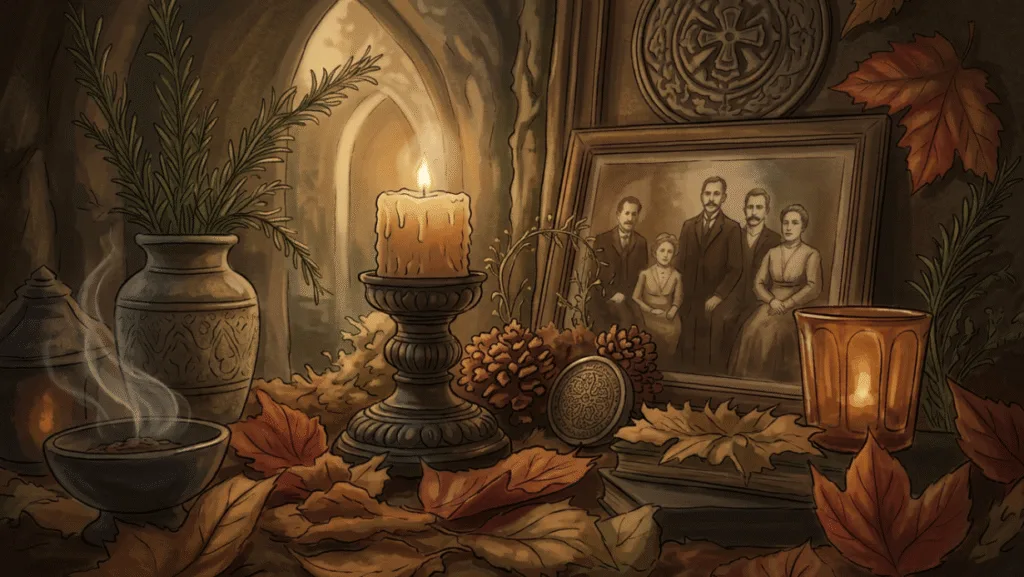
An ancestor plate is one of the gentlest ways to bring remembrance into a Samhain meal. Set one extra place at the table, or place a small saucer beside a photograph, heirloom or written name. Add a little of the food you have made, or choose one thing the person loved.
You do not need to believe that anybody literally arrives for dinner. The empty place can be symbolic: a visible acknowledgement that the people we have lost are still part of our stories. It can honour family, friends, chosen family, beloved pets, teachers or the people further back whose names you may not know.
If grief feels raw, keep this very simple. Light a candle, make a cup of tea and let yourself remember one good thing. There is no prize for making the evening intense. A small moment of tenderness is more than enough.
For a fuller ritual around ancestor remembrance, read Honour Your Ancestors with a Simple Samhain Ritual.
What is a Dumb Supper?
A Dumb Supper is a silent meal held in remembrance of ancestors and loved ones who have died; here, “dumb” uses the older meaning of silent. Some people set an extra place, eat the whole meal quietly and use the stillness to make space for memory. Others keep a short silence before sharing food and stories afterwards.
It can be powerful, but it is not a compulsory part of Samhain and it is not right for every household. Small children, neurodivergent guests, people who are grieving deeply or anyone who simply hates forced solemnity do not need to be put through a silent dinner to prove they care. A warm, chatty meal filled with stories can honour people just as beautifully.
If the idea speaks to you, our Dumb Supper guide explains how to prepare one with care and without turning it into a performance.
Sharing the feast with other people
Samhain can be wonderfully communal, but the right sort of gathering depends on your people. A few friends round a table, a family tea, a picnic before a bonfire event or a quiet supper with one person you trust can all be a feast. The purpose is to create warmth and connection at a point in the year when the evenings close in.
If you are hosting, take the pressure off yourself. Ask guests to bring a dish, pick a theme only if it helps and make dietary needs part of the plan rather than an awkward afterthought. Put out labels if allergens matter. Offer a non-alcoholic drink that feels just as special. Remember that a candlelit table is lovely, but a fire-safe LED candle is lovelier than a tablecloth emergency.
You could also invite people to bring a recipe, a photo, a written memory or a song that reminds them of someone they love. That turns the meal into a shared memory table without requiring anybody to disclose more than they want to.
A simple Samhain feast menu
If you would like a ready-made starting point, try this uncomplicated menu:
- To begin: Roasted Pumpkin Soup with crusty bread.
- For the table: Roasted Root Vegetables, something green and a main dish that suits your household.
- To finish: Spiced Apple Pie with custard, cream or whatever makes it feel like autumn in your own family.
- To drink: tea, hot chocolate, mulled apple juice, cider or simply water in the nice glasses.
Add an ancestor plate if that feels right, take a moment of gratitude before you eat, and let the rest of the evening be ordinary in the best possible way. A proper Samhain feast is not about making the perfect photograph. It is about making people feel welcome, fed and remembered.
The magic is feeding people
Samhain food brings together the most human parts of the season: harvest, warmth, memory and the need to gather close when the nights turn cold. Make the soup. Roast the vegetables. Bake the pie even if the pastry is wonky. Let the table be a place for the living, for memory and for whatever gratitude you have room for.
For more background on the seasonal tradition, Historic Environment Scotland’s guide to Samhainn and Scottish Hallowe’en traditions is a useful starting point. Above all, make your Samhain feast fit your actual life. The ordinary care of a warm meal can be magic enough.
Handcrafted Tools