From The Grimoire
Samhain Altar Ideas for the Witch’s New Year
Create a personal Samhain altar for remembrance, protection and the turning year using candles, herbs, ancestor objects and autumn finds.
Table of Contents

Honouring Ancestors and the Turning of the Year
There’s a certain feeling that arrives at Samhain which no other sabbat quite captures properly.
The world goes quieter.
Leaves gather in gutters and stick to your boots. Bonfire smoke drifts through cold evening air. Kitchens glow gold against early darkness while outside everything smells of rain, damp earth, and woodsmoke.
And honestly, I think that’s why Samhain altars feel so powerful.
Not because they’re elaborate.
Not because they look good on Instagram.
But because they create a small point of warmth and meaning right in the middle of the darkening season.
A Samhain altar is less about decoration and more about atmosphere.
Memory.
Protection.
Connection.
A place where the ordinary world softens slightly and the deeper emotional currents of the season are allowed space to breathe.
Samhain and the Turning of the Year
Samhain itself marks the turning into the darker half of the Wheel of the Year.
Traditionally, it was the end of harvest season and the beginning of winter. Fires burned on hillsides across Britain and Ireland while people gathered indoors to feast, remember the dead, and prepare for colder months ahead.
Here in Lancashire, old Hallowtide traditions still linger quietly beneath modern life if you know where to look. Lanterns once glowed across hillsides to guide spirits and ward away harm. Herbs hung drying beside hearths. Candles burned in windows through the long dark nights.
And honestly?
Lighting a candle on a Samhain altar still carries echoes of all of that.
A tiny act of warmth held against the dark.
Let Your Altar Feel Personal
One of the loveliest things about Samhain altars is that they’re allowed to feel personal.
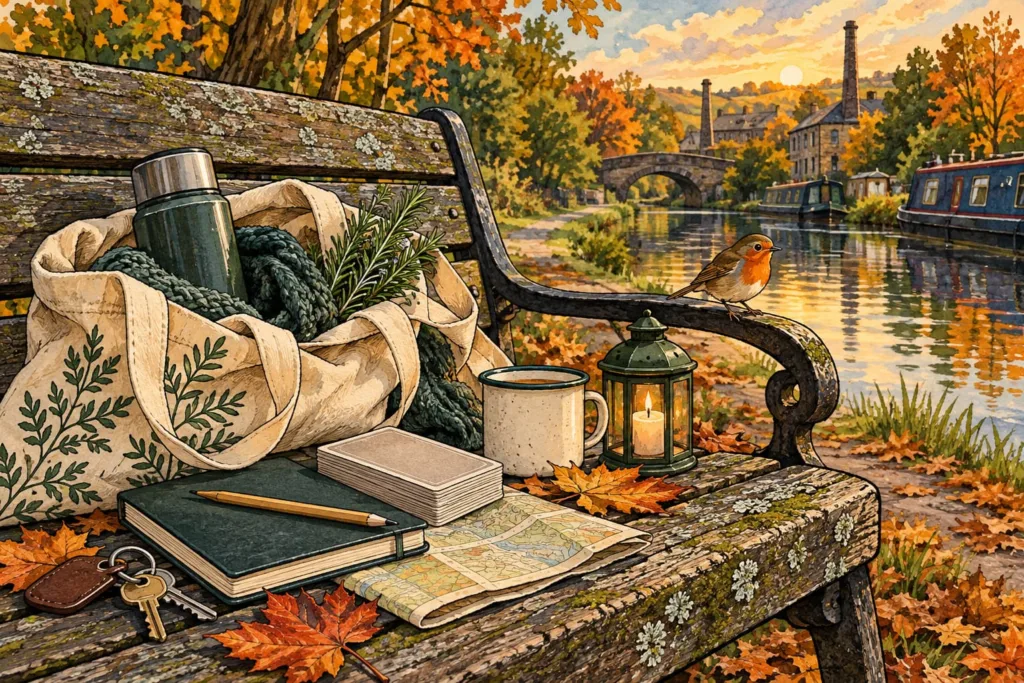
This isn’t a polished “perfect witch aesthetic” sort of sabbat. Samhain altars work best when they feel layered, lived-in, slightly melancholy, and emotionally real.
Think:
- candles burning low
- apples in bowls
- rosemary drying beside photographs
- black tea steaming nearby
- old heirlooms
- autumn leaves gathered from walks
- blankets over chairs
- handwritten notes tucked beside offerings
That sort of atmosphere.
Very hearth magic.
Very northern autumn.
Very human.
Candles for Samhain
Candles naturally sit at the centre of most Samhain altars because fire has always mattered at this time of year.
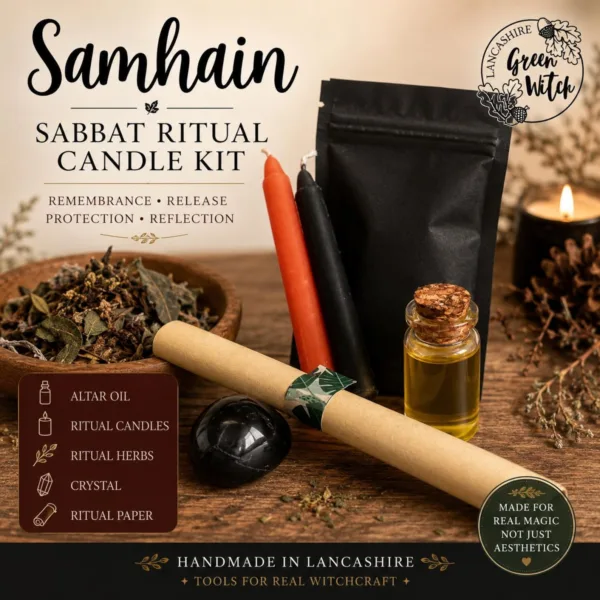
Black candles bring grounding, protection, and boundary energy into the space. Orange candles carry warmth, courage, and the lingering glow of harvest season before winter fully settles in.
Lighting them together feels very Samhain somehow:
shadow and warmth existing side by side.
And honestly, that balance sits at the centre of the season itself.
You don’t need dozens of candles either. A single flame glowing beside the window on a rainy evening can feel deeply sacred at Samhain.
Probably because humans have always needed light during dark seasons.
Herbs and Seasonal Scent
Herbs belong beautifully on Samhain altars too.
Rosemary especially feels woven into autumn magic somehow. Sharp, protective, and deeply tied to remembrance, it’s been associated with ancestor traditions and household protection across Britain for generations.
Sage brings cleansing and freshness into the space. Mugwort adds dreamier, more intuitive energy suited to divination and reflection.
And honestly, even the smell of herbs matters.
Samhain magic is deeply sensory:
- rosemary smoke
- candle wax
- cold air
- mulled cider
- damp leaves
- old wood
- black tea
The atmosphere becomes part of the ritual.
Ancestor Remembrance
Ancestor work often naturally becomes part of a Samhain altar too.
Photographs.
Jewellery.
Letters.
Favourite foods.
Objects connected to people you miss.
Not because the altar becomes some dramatic portal to the dead, but because Samhain creates room for remembrance in a way modern life rarely does.
And honestly, I think that’s why so many people feel emotional around Samhain without fully understanding why.
This season gives grief permission to sit beside love openly for a little while.
You might place:
- bread
- apples
- tea
- whisky
- flowers
- recipes
- old photographs
on the altar as offerings or acts of remembrance.
Simple things carry enormous emotional weight sometimes.
Bringing the Local Landscape In
Nature itself becomes part of the altar too.
Acorns.
Seed heads.
Blackberries.
Ivy.
Fallen leaves.
Small stones gathered on walks.
In Lancashire especially, it feels right somehow to include pieces of the local landscape in Samhain magic. Pendle stone. Rowan berries. Ivy from garden walls. Things that tie the altar back to the land beneath your feet.
That grounding matters.
Because the strongest folk magic rarely feels disconnected from place.
Using Your Altar Through the Season
Once your altar is built, it becomes a living space through the season rather than a static display.
You might:
- light candles each evening
- sit quietly with tea
- journal
- pull tarot cards
- speak to ancestors
- leave offerings
- meditate
- simply pause there for a few minutes after difficult days
And honestly, sometimes the most powerful ritual is simply allowing yourself to sit quietly in candlelight without immediately reaching for your phone.
Samhain encourages that sort of stillness naturally.
A Samhain Altar Does Not Need to Be Perfect
What I love most about Samhain altars is that they don’t demand perfection.
A windowsill can become sacred.
A kitchen corner can become sacred.
A single candle and a few autumn leaves can become sacred.
The intention matters more than the appearance ever will.
And honestly, I think modern witchcraft sometimes forgets that while chasing aesthetics.
Real magic usually looks much more ordinary.
It looks like:
- someone lighting a candle after work
- rosemary hanging beside the cooker
- photographs beside autumn apples
- tea growing cold while memories surface quietly
That’s the sort of magic people have practiced for centuries.
Final Thoughts
As Samhain passes into November, you can leave the altar standing if it still feels comforting.
Let it become a small anchor point through darker days. Somewhere warm to pause beside while the world outside grows colder and quieter.
Because ultimately, a Samhain altar isn’t really about decoration at all.
It’s about creating space for:
- memory
- protection
- reflection
- grief
- gratitude
- connection
- warmth
And honestly?
That feels like exactly the sort of magic most people need this time of year.
Handcrafted Tools