From The Grimoire
Pentacle vs Pentagram: What’s the Difference?
Discover the real meaning behind pentacles and pentagrams in witchcraft, protection magic, and modern spiritual practice.
Table of Contents
There’s a moment most witches experience at some point.
You’re wearing a pentacle necklace minding your own business in Tesco when somebody either:
- assumes you worship Satan
- asks if you’re “into dark stuff”
- or stares at your jewellery like you’re about to summon a goat demon beside the reduced vegetables.
Honestly, at this point most witches are too tired to explain.
But the pentacle and pentagram are probably two of the most misunderstood symbols in modern spirituality. Which is ironic really, considering they’ve existed peacefully across multiple cultures for thousands of years without demanding nearly as much drama as the internet gives them now.
And despite all the fearmongering nonsense surrounding them, most witches I know wear pentacles for the exact opposite reason people assume.
Protection.
Balance.
Grounding.
Connection.
Not because we’re secretly plotting the downfall of civilisation between herb jars and cups of tea.
So… What’s the Difference?
This confuses loads of beginners, so let’s make it simple.
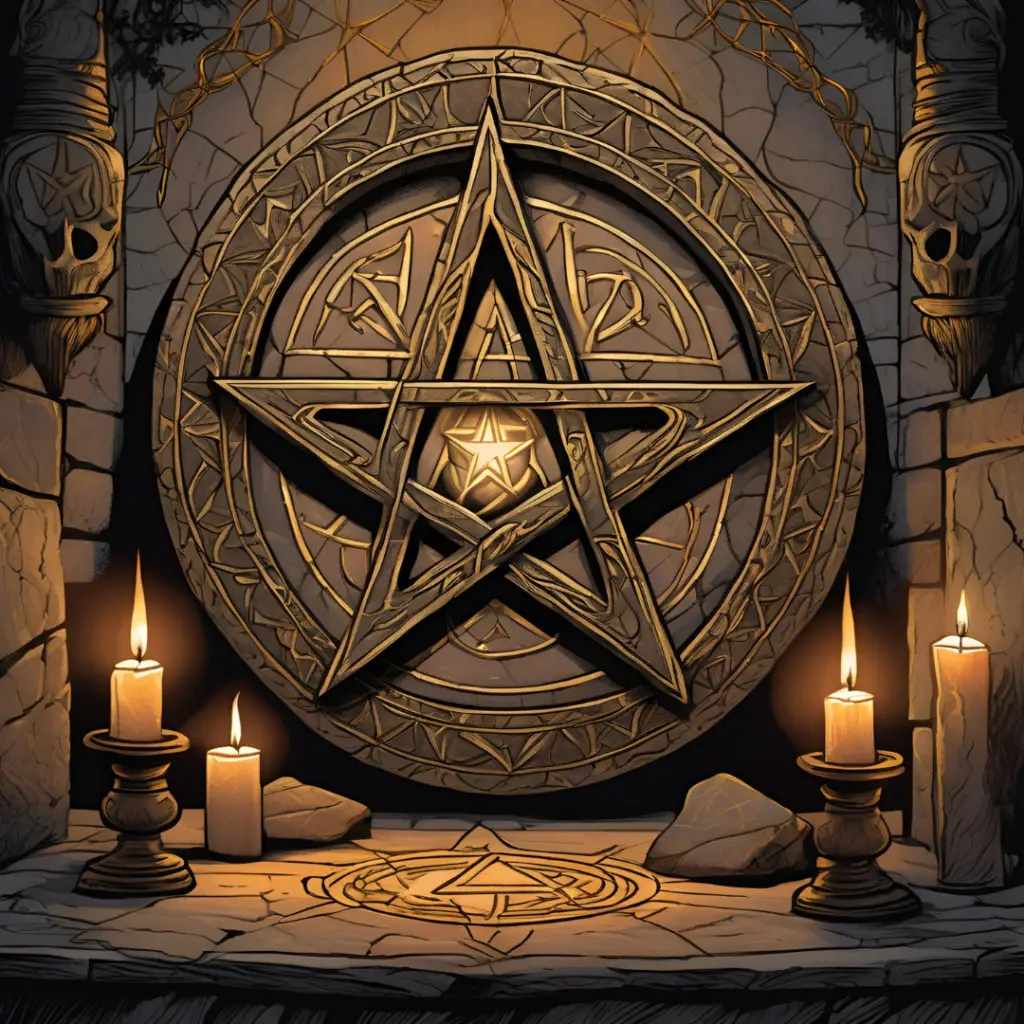
A pentagram is the five-pointed star itself.
A pentacle is the star enclosed within a circle.
That’s it.
No secret hidden conspiracy.
No dramatic spiritual ranking system.
Just slightly different versions of the same symbol.
In modern witchcraft, people often use the words interchangeably anyway.
Why the Five Points Matter
Traditionally, the five points of the pentagram represent:
- earth
- air
- fire
- water
- spirit
Spirit usually sits at the top point, representing balance between the physical and spiritual worlds.
That’s one of the reasons so many witches connect with it. It’s not a symbol of domination over nature. It’s a symbol of being part of nature.
Everything connected.
Everything balanced.
Everything influencing everything else.
Honestly, it’s a much calmer symbol than popular culture makes it out to be.
The Circle Changes the Meaning Slightly
When the star sits inside a circle, becoming a pentacle, the symbolism deepens a bit.
The circle tends to represent:
- protection
- wholeness
- cycles
- eternity
- connection
Which is why pentacles became so popular in witchcraft and Wicca specifically.
They’re protective symbols.
Not in a flashy fantasy-film way.
More in the:
“I want to feel spiritually grounded while surviving modern life”
kind of way.
And frankly, that feels increasingly reasonable these days.
The Satanic Panic Did A Number On This Symbol
A lot of fear around pentagrams comes from films, media panic, and decades of misinformation.
Particularly during the 1980s Satanic Panic, where basically anything vaguely alternative got labelled evil by people who thought Dungeons & Dragons might summon Beelzebub through the family carpet.
The pentagram got dragged into all that nonsense hard.
But historically?
The symbol existed long before modern Satanism, Wicca, or contemporary witchcraft.
It’s appeared in:
- ancient Mesopotamia
- Greek mathematics
- Christian symbolism
- folk magic
- ceremonial magic
- occult traditions
- protective talismans
Even early Christians used it at points to represent the five wounds of Christ.
Symbols evolve.
Humans project meaning onto them constantly.
That’s true for almost every spiritual symbol on earth.
Most Witches Use Pentacles Very Practically
Honestly, most real-world witchcraft is much less dramatic than people imagine.
The pentacle usually ends up:
- hanging on a necklace
- sitting on an altar
- carved into candles
- painted onto tools
- drawn during rituals
- tucked into protection work
Mine appears mostly:
- on jewellery
- on spell oils
- scribbled onto notes
- accidentally covered in tea stains beside the kettle
Very glamorous stuff.
But symbols matter because humans matter. We’re symbolic creatures. We attach emotion, memory, and intention to objects naturally.
A pentacle can become:
- a grounding point
- a reminder of your path
- a protective focus
- a symbol of identity
- a connection to your practice
That’s powerful enough on its own.
You Don’t Need To “Earn” The Symbol
I think beginners worry about this a lot too.
Like there’s some secret witch exam where a council of elderly forest goblins decides whether you’re officially allowed to own pentacle jewellery.
There isn’t.
You do not need:
- decades of experience
- formal initiation
- perfect knowledge
- aesthetic Instagram altars
- encyclopaedic herb wisdom
You’re allowed to connect with symbols that feel meaningful to you.
That’s how spiritual practice grows.
Quietly.
Personally.
Over time.
The Pentacle As Protection
Protection is probably the most common modern use.
Not because witches think evil spirits are lurking behind every Morrisons meal deal waiting to attack.
But because protective symbols help people feel:
- centred
- safer
- grounded
- emotionally stronger
There’s genuine psychological comfort in symbolic protection.
And honestly?
In stressful times, comfort matters.
A lot.
That’s one reason folk symbols survive for centuries. Humans keep the things that help us endure difficult periods.
The pentacle’s survived because it continues to mean something to people.
My Own Relationship With The Symbol
For me personally, the pentacle stopped being about “witchcraft aesthetics” years ago.
Now it mostly represents balance.
The reminder that:
- rest matters as much as action
- intuition matters as much as logic
- the spiritual and practical can coexist
- nature isn’t separate from us
- ordinary life can still hold magic
And honestly?
Sometimes it’s simply a quiet reminder of who I am underneath all the noise of modern life.
That’s enough reason to wear one.
From One Witch to Another
The pentacle and pentagram aren’t scary symbols.
They’re old ones.
Symbols of connection.
Protection.
Balance.
Cycles.
Human beings trying to understand their place in the world.
And despite all the weird panic surrounding them over the years, most witches are still just ordinary people:
- making tea
- lighting candles
- talking to herbs
- trying to survive adulthood
- and occasionally terrifying strangers in Aldi with our jewellery choices
Which feels deeply on brand for witchcraft, honestly.
Handcrafted Tools