Yule is one of the most comforting points in the witchy calendar for me. It arrives right when the world feels dark, cold, exhausting and just a little bit too much. The days are short, everyone’s knackered, and half the country seems to be surviving entirely on fairy lights, tea and stubbornness.
And then the Winter Solstice arrives.
That tiny turning point where the light slowly begins to return.
Yule, traditionally celebrated around the 21st of December, marks the longest night and the rebirth of the Sun. For witches, pagans and people who simply feel deeply connected to the changing seasons, it’s a celebration of hope, warmth, resilience and renewal.
It reminds us that even in the darkest part of the year, the light always comes back.
What Is Yule?
Yule is the Winter Solstice festival. Its roots stretch back through old Nordic and Germanic traditions, long before modern Christmas traditions took shape. In fact, quite a few things now associated with Christmas originally came from older Yule celebrations.
Evergreens indoors.
Candles and lights.
Wreaths.
Feasting.
Decorating trees.
Gathering around the hearth during the darkest days of winter.
None of it is particularly new.
For modern witches and pagans, Yule is less about perfection and more about warmth, reflection and connection. It’s a time to slow down a bit. To rest where you can. To appreciate the people around you. To look back at the year you’ve survived and think about what you want to carry forward into the next one.
Traditional Symbols of Yule
The Yule Log
The Yule log is one of the best-known Yule traditions. Historically, a large log would be burned in the hearth to welcome warmth, luck and protection into the home.
These days, most of us do not have giant medieval fireplaces knocking about, but the symbolism still works beautifully.
Some people decorate a small log with dried oranges, cinnamon sticks, pinecones and greenery. Others burn candles instead. The point is the intention behind it: welcoming light back into your life.
Evergreens
Holly, ivy, pine and fir all carry strong Yule energy. In the middle of winter, when everything else looks half dead and miserable, evergreens remain alive and vibrant.
They symbolise endurance, resilience and the promise that life continues beneath the frost.
Also, they make the house smell incredible.
Candles and Fairy Lights
Honestly, witches were absolutely built for fairy light season.
At Yule, lights represent the returning Sun and the slow return of brighter days ahead. Candles are especially popular during solstice rituals, often lit at sunset to honour the turning of the wheel.
There is something deeply comforting about candlelight on a dark winter afternoon while the rain lashes sideways outside like a proper Lancashire winter tantrum.
Wreaths and Sun Symbols
Circular wreaths represent the endless cycle of the seasons. Beginning, ending, beginning again.
Yule sits right in the middle of that cycle. A pause point. A breath before the light starts growing stronger again.
Simple Ways to Celebrate Yule
You do not need an Instagram-perfect altar or a woodland cottage full of antique cauldrons to celebrate Yule properly.
A simple, meaningful celebration is more than enough.
Create a Yule Altar
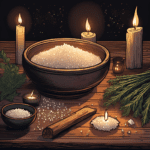
Add seasonal greenery, candles, pinecones, dried oranges, cinnamon or winter crystals like garnet and bloodstone.
Even one small corner of a shelf can become a lovely little seasonal space.
Light a Candle at Sunset
This is one of the simplest and most powerful Yule practices.
Light a candle and take a quiet moment to think about:
- what you’re leaving behind
- what carried you through this year
- what hope you want to carry forward
Nothing fancy required.
Make a Simmer Pot
A proper winter simmer pot feels incredibly Yule-coded.
Orange slices, cinnamon, cloves and pine needles bubbling away on the stove make the whole house feel warm, magical and comforting.
Especially useful when the weather outside looks personally offended by your existence.
Share Food With People You Love
Yule has always been connected to feasting and community.
Stews, fresh bread, mulled drinks, roasted vegetables, biscuits, pies and comforting winter foods all fit beautifully into Yule celebrations.
At its heart, Yule is about warmth. And feeding people is one of the oldest forms of magic there is.
Reflect on the Year
Yule is a wonderful time for gratitude and reflection.
Not in a forced “positive vibes only” sort of way.
Just honestly acknowledging:
- what hurt
- what healed
- what changed
- what survived
And recognising your own resilience along the way.
Yule Correspondences
Element
Earth
Planet
Sun
Zodiac
Capricorn
Crystals
Garnet, bloodstone, ruby
Herbs and Plants
Cinnamon, pine, cedar, holly, ivy, evergreen
Colours
Red, green, gold, silver, white
Final Thoughts
Yule reminds us that darkness is not permanent.
The wheel keeps turning.
The light returns.
Spring eventually follows.
And honestly, I think a lot of us need that reminder by December.
So whether your Yule involves a full ritual, a quiet candle, a house full of family chaos or simply sitting under fairy lights with a warm drink and a cat nearby, I hope it brings you comfort, peace and a little bit of magic this winter.
More Yule Magic to Explore
- Yule Evergreens
- Winter Solstice Meditation
- Yule Blessing Spell
- Yule Correspondences
- Lancashire Yule Guide