From The Grimoire
Embrace the Magic of Yule with Powerful Seasonal Correspondences
Discover Yule’s magical correspondences, from crystals to herbs, to enhance your rituals and connect deeply with the energies of the winter solstice.
Table of Contents
By the time Yule rolls around, plenty of us are already quite done with winter. It is dark before tea, the house smells faintly of damp coats and leaving the sofa can feel like a personal affront.
That is exactly why Yule correspondences can be useful. They offer a simple way to make the season feel noticed rather than merely endured: warm colours, evergreen branches, familiar scents, comforting food and one small light against a lot of dark.
Think of correspondences as a set of seasonal prompts, not a rulebook. You do not need every item, and you do not need to perform them perfectly. Pick what is available, safe and meaningful in your actual life.
What Are Yule Correspondences?
Yule correspondences are colours, plants, stones, symbols, foods and themes that people commonly connect with the Winter Solstice. In modern Pagan and witchcraft practice, they can help shape an altar, a ritual, a meal, a spell jar or simply the atmosphere of a winter evening.
Some associations draw on regional folklore and historical seasonal customs; others are modern magical conventions. There is no single universal list that every Pagan, witch or household has always used. That is not a problem. The purpose is to help you pay attention to the season, not to win a quiz about doing Yule correctly.
At their simplest, Yule correspondences centre on rest, resilience, warmth, protection, hope and the gradual return of light.
A Quick Yule Correspondences List
Use this as a starting point, then keep only what feels useful:
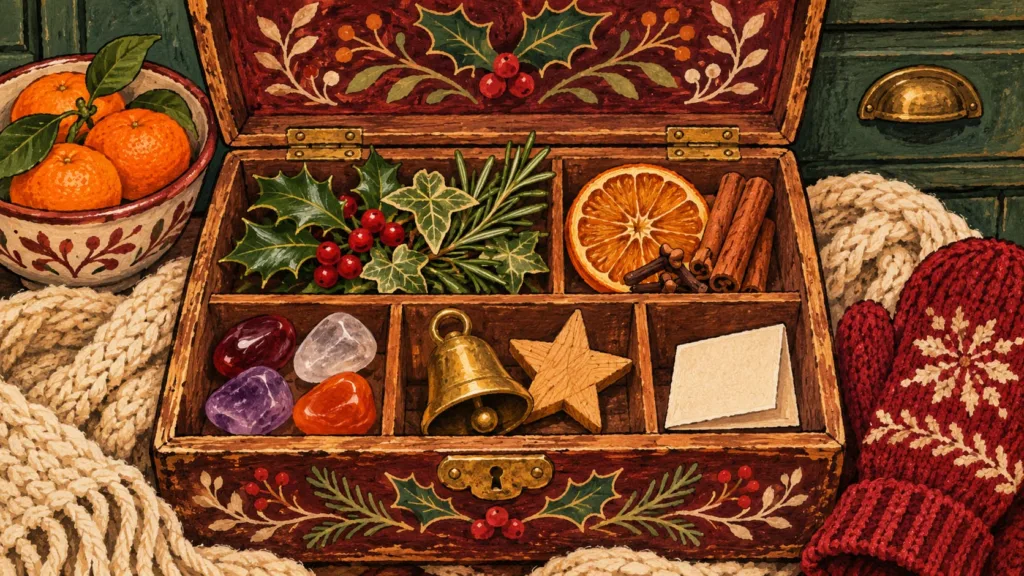
- Colours: red, green, gold, white and silver
- Plants: pine, fir, holly, ivy, mistletoe and rosemary
- Herbs and spices: cinnamon, clove, ginger, sage and bay
- Crystals: garnet, clear quartz, amethyst and carnelian
- Symbols: the sun, candles, stars, bells, the Yule log and evergreen wreaths
- Foods: oranges, apples, nuts, root vegetables, warming bakes and spiced drinks
- Themes: renewal, protection, home, reflection, gratitude, hope and rest
You do not need all of it. One gold candle, a clementine and a quiet intention can hold just as much meaning as an elaborate altar.
Yule Colours and Their Meanings
Yule colours are usually drawn from the things that make winter feel alive: berries, firelight, evergreen leaves, frost and the promise of the returning sun.
- Red is often used for warmth, vitality, courage and endurance. Think holly berries, winter fires and the cheeks you get after being outside longer than was sensible.
- Green represents evergreen life, resilience, continuity and renewal.
- Gold is linked with sunlight, illumination, hope and prosperity.
- White and silver can suggest snow, stillness, reflection, cleansing and moonlight.
Bring these colours in through candles, fabric, decorations, flowers, altar cloths or even the food on your table. Use what you enjoy looking at. A colour correspondence should make the room feel better, not turn decorating into homework.
Evergreens and Winter Plants
Evergreens are a natural fit for Yule because they remain green when so much of the landscape is bare. In modern magical practice, pine and fir are often associated with cleansing, protection, renewal and endurance, while holly can represent boundaries and household protection.
Rosemary is another useful winter cupboard staple, often connected with remembrance, protection and clear intention. Ivy is commonly used as a symbol of persistence and connection. Mistletoe has a long and complicated place in folklore, so it is best enjoyed as a decorative seasonal symbol rather than treated as something to consume or use casually around pets.
Use only plants you can identify and source responsibly. Keep fresh greenery away from flames and out of reach of children and animals where necessary.
Yule Herbs and Spices
Yule herbs are usually warm, aromatic and comforting. Their scent can make a home feel seasonal, while their magical associations give a simple ritual a bit of focus.
- Cinnamon: warmth, abundance, energy and motivation.
- Clove: protection, grounding, comfort and prosperity.
- Ginger: courage, movement, vitality and a little fire in the darker months.
- Sage: wisdom, cleansing and release.
- Bay: intention, protection and wishes.
Add culinary herbs and spices to food or warm drinks if that is how you enjoy them. For incense or smoke work, use only materials that are suitable for burning, ensure good ventilation and keep smoke away from anyone with respiratory sensitivities. Scent can be comforting, but it is not a replacement for professional support if low mood or anxiety is becoming difficult to manage.
Yule Crystals for Reflection and Steadiness
You do not need seventeen crystals arranged in a sacred Fibonacci spiral to mark Yule. One stone you like the look of is enough. Use crystals as touchstones for reflection or intention rather than expecting them to do all the work while you sit under a blanket avoiding your emails.
- Garnet is often linked with grounding, determination, strength and protection.
- Clear quartz is commonly used for clarity, focus and amplifying an intention.
- Amethyst can support a quieter practice centred on rest, reflection and intuition.
- Carnelian is often associated with warmth, confidence and creative energy.
Place a stone on your altar, carry one in your pocket, hold it during a short meditation or put it beside a written intention. The ritual is in the attention you give it.
Yule Symbols to Work With
Symbols are useful because they can carry a lot of meaning without needing a full ritual script. At Yule, you might work with:
- The sun or a candle flame for the returning light.
- A wreath or circle for the turning year and continuity.
- The Yule log for warmth, hearth and the fire that carries a household through winter.
- Stars for guidance, hope and the wide winter sky.
- Bells for celebration, clearing the atmosphere and marking a threshold.
- Oranges for warmth, brightness and sun symbolism.
Pick one symbol and let it do its job. A single candle lit with intention can be more powerful than a table full of items you do not actually connect with.
Food, Drink and the Hearth
Yule magic belongs in the kitchen as much as it does on an altar. Food can be an act of care, a gathering point and a practical way to honour the season. Root vegetables, apples, nuts, citrus, gingerbread, spiced bakes, soups and warm drinks all fit beautifully.
You might prepare a meal with a simple intention: warmth for the household, gratitude for what has carried you this far, or rest after a difficult year. You do not need to make a banquet. Tea in your favourite mug and a slice of toast eaten while sitting down properly may be the most realistic hearth magic on offer.
If you make offerings, keep them safe and respectful. Do not leave food outdoors where it could harm wildlife or create a mess. A small portion placed on your altar briefly, then eaten, composted or disposed of appropriately, is enough.
Use Yule Correspondences in Everyday Life
Yule correspondences work best when they support your real winter rather than becoming another task to fail at. Try one small seasonal act:
- Light a gold or white candle safely in the evening, or use an LED candle.
- Add a sprig of rosemary or evergreen greenery to a windowsill.
- Wear a colour that makes you feel warmer and steadier.
- Make a small orange-and-clove pomander.
- Write down one thing you are releasing and one hope you are tending.
- Cook something warm and share it, or save a portion for yourself.
Tiny things count. In fact, they are usually the things that survive the busy bits of December.
More Yule Magic to Explore
These guides can help you build a Yule practice that suits your home and your energy:
Let the Season Be Enough
Yule correspondences are not about performing witchcraft perfectly. They are ways of making the darkest part of the year feel warmer, more deliberate and more human.
Whether you light a candle, wear a bright colour, cook a bowl of soup or sit quietly with one small stone in your hand, let it count. Winter is temporary. The light returns. And rest is part of the turning wheel too.
Handcrafted Tools