From The Grimoire
What Is Litha? Meaning of the Summer Solstice Sabbat
Learn what Litha means, why witches celebrate the Summer Solstice, and how sunlight, fire, herbs, gratitude and seasonal change shape midsummer magic.
Table of Contents
There’s a point every year where the light feels endless.
The evenings stretch on forever. Gardens explode into bloom overnight. Bees stagger drunkenly around foxgloves like they’ve had one too many at the midsummer pub. People start sitting outside until silly o’clock because for once Britain feels vaguely habitable again.
That’s Litha.
The Summer Solstice.
The point on the Wheel of the Year where the sun stands at its absolute peak and the earth feels completely alive.
And honestly?
There’s something deeply emotional about it if you stop long enough to notice.
Because Litha isn’t just about celebration.
It’s also about recognising:
this moment won’t last forever.
The wheel always turns.
Which somehow makes the warmth, abundance and beauty of midsummer feel even more precious.
What Is Litha?
Litha is the Summer Solstice Sabbat, celebrated around the 21st of June in the Northern Hemisphere.
It marks:
- the longest day
- the shortest night
- the peak of the sun’s strength
- the height of midsummer energy
Within the Wheel of the Year Litha sits opposite Yule.
At Yule, we celebrate the return of light from darkness.
At Litha, we stand fully inside that light at its strongest point before the slow turning back toward autumn quietly begins.
And honestly, there’s something beautifully human about that symbolism.
Litha reminds us:
- enjoy things while they’re blooming
- appreciate what’s flourishing
- celebrate joy while it’s here
- and recognise that cycles are natural
Very:
“sit in the sunshine properly before life starts hurtling toward autumn again”
energy.
If you’re newer to seasonal witchcraft, this is one of the loveliest Sabbats to begin with because Litha celebrations can be incredibly simple and grounded.
Litha Feels Full
That’s the word that always comes to mind for me honestly.
Full.
The gardens are full.
The evenings are full.
The trees are heavy with leaves.
The air smells alive.
Even the herbs seem to be showing off by this point.
Everything feels rich and abundant.
Very different energy from Beltane’s chaotic blooming excitement.
Litha seasonal magic feels steadier somehow.
Warmer.
More settled.
Like the earth itself is basking in everything it’s grown.
And honestly, after long difficult winters emotionally or physically, there’s something deeply comforting about that fullness.
The Sun at Its Strongest
At the heart of Litha spiritual meaning is the power of the sun itself.
Historically, people celebrated the Summer Solstice because sunlight meant:
- crops growing
- warmth
- survival
- abundance
- life continuing
And honestly?
That connection still lives somewhere deep in people now even if most of us aren’t relying on successful turnip harvests to survive winter anymore.
Humans still respond to light.
You feel it in your body:
- longer evenings
- warmer skin
- brighter moods
- more energy
- more time outdoors
- more connection
Litha invites us to consciously appreciate that.
To stop rushing for five bloody minutes and actually notice:
“This is beautiful.”
Which modern life doesn’t always encourage enough honestly.
Fire and Solar Energy
Litha is traditionally a fire festival.
Bonfires were historically lit across communities to honour the sun’s strength and offer:
- protection
- blessing
- purification
- vitality
People would dance around the fires, leap over flames for luck and celebration, and carry embers home to bless their hearths.
Now obviously most modern witches are not casually building giant hilltop bonfires because:
- the neighbours would panic
- Britain can barely survive barbecue season without somebody melting a wheelie bin
…but fire still holds strong midsummer energy.
Even:
- lighting candles
- sitting around a firepit
- lanterns in the garden
- incense smoke in warm evening air
can become part of simple Litha rituals.
Fire at midsummer feels different somehow too.
Less:
survival warmth
More:
celebration warmth.
Herbs and Flowers at Litha
Midsummer is one of the richest times of year for herbs.
Everything smells incredible.
Lavender starts blooming properly. Roses are everywhere. Herbs are thriving in gardens and spilling out of pots like they’ve completely lost all restraint.
And honestly?
I love that energy.
Traditional herbs for Litha include:
- lavender
- rosemary
- mugwort
- yarrow
- chamomile
- St John’s Wort
Many folk traditions believed herbs gathered at midsummer carried extra strength because they’d absorbed the sun’s power at its peak.
Which honestly feels very believable when you’re standing outside in June sunlight trying not to get emotionally attached to your herb pots again.
If herbs are especially your thing, my herbs for Litha guide explores midsummer plant magic and Summer Solstice witchcraft much more deeply.
Litha Is Also About Gratitude
One thing I think gets overlooked sometimes in modern witchcraft spaces is how much Litha is about appreciation.
Not chasing.
Not manifesting harder.
Not desperately trying to optimise your spiritual productivity.
Just:
appreciating what already exists.
The garden blooming.
A warm evening.
People you love.
A peaceful moment.
A body that’s carried you this far.
Food on the table.
Birdsong through open windows.
That kind of gratitude feels deeply rooted in folk magic honestly.
Very grounded.
Very human.
Modern Litha Celebrations
You do not need elaborate rituals to celebrate Litha meaningfully.
Some genuinely lovely ways to celebrate include:
- watching the sunrise
- eating outdoors
- gathering herbs
- lighting candles at sunset
- spending time in nature
- making flower crowns
- cooking seasonal food
- sitting around a firepit
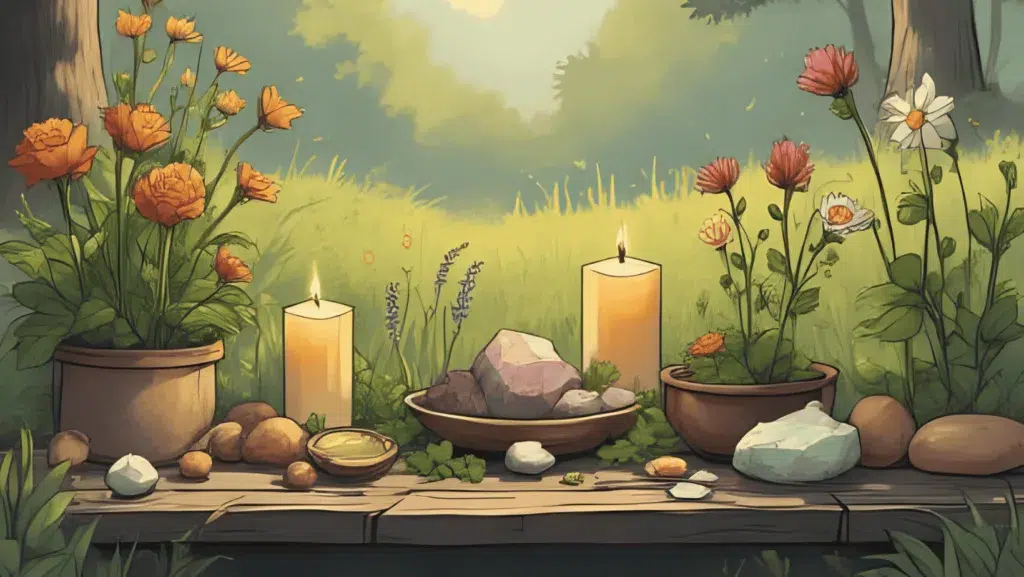
- creating a midsummer altar
- simply slowing down enough to enjoy the season
That all counts.
Honestly, I think some of the strongest Summer Solstice rituals happen in quiet ordinary moments people almost overlook.
A cup of tea in the garden.
Warm evening air through open windows.
The smell of rosemary and lavender drying in the kitchen.
That’s magic too.
The Quiet Turning Beneath the Light
Now this part always feels important to me personally.
Because underneath all the warmth and abundance, Litha also quietly reminds us:
the wheel turns.
After the Summer Solstice, the days begin gradually shortening again.
Not immediately in some dramatic:
“winter is coming”
way.
But subtly.
Almost invisibly at first.
And honestly, I think that’s part of why Litha can feel slightly emotional sometimes.
It reminds us:
- enjoy things while they’re here
- celebrate moments fully
- don’t sleepwalk through joy
- abundance deserves noticing too
Very midsummer magic energy.
A Simple Litha Blessing
Light a candle at sunset and say:
“I honour the fullness of life.
I honour the warmth of the sun.
I give thanks for all that’s growing.”
Then just sit quietly for a few minutes and let yourself enjoy the season properly.
Honestly?
That’s beautiful Litha magic already.
Final Thoughts
Litha is the earth in full bloom.
A celebration of:
- sunlight
- warmth
- abundance
- beauty
- growth
- gratitude
- joy
But also a gentle reminder that every season changes eventually.
Which somehow makes midsummer feel even more precious.
So stay outside a bit longer.
Eat strawberries in the garden.
Light the candle.
Gather herbs.
Watch the sunset properly.
Let yourself stand fully inside the light while it’s here.
Because honestly?
That’s what Litha is really about.
Handcrafted Tools