Before Bay Leaves Were “Just for Soup”
Let’s be honest. Most people only think about bay leaves when they’re fishing one dramatically out of a casserole wondering whether it actually did anything.
And fair enough.
Bay has become one of those herbs everybody owns but nobody really thinks about.
But historically?
Bay leaves were doing far more than floating about in stew looking decorative.
Before modern medicine, bay was part of the household medicine chest. People used it for:
- coughs
- aches
- digestion
- cleansing
- protection
- warding illness
- and general “please let this winter stop trying to kill us” support
Which, considering British winters are still basically six months of damp lungs and low morale, honestly still tracks.
Bay as a Healing Herb in Folklore
Bay (Laurus nobilis) was sacred to Apollo in Ancient Greece and Rome, tying it to both healing and prophecy.
Laurel wreaths weren’t just victory crowns.
They were protective symbols too.
People believed bay could:
- protect against plague
- guard against illness
- cleanse bad energy
- strengthen vitality
- and ward off spiritual harm
During medieval outbreaks, households hung bay in kitchens and pantries to protect food and homes from sickness.
Bay has been studied for a range of plant compounds and laboratory properties, but that does not mean historical plague protections were medically effective. The folklore and the modern research are interesting to compare, but they are not the same claim.
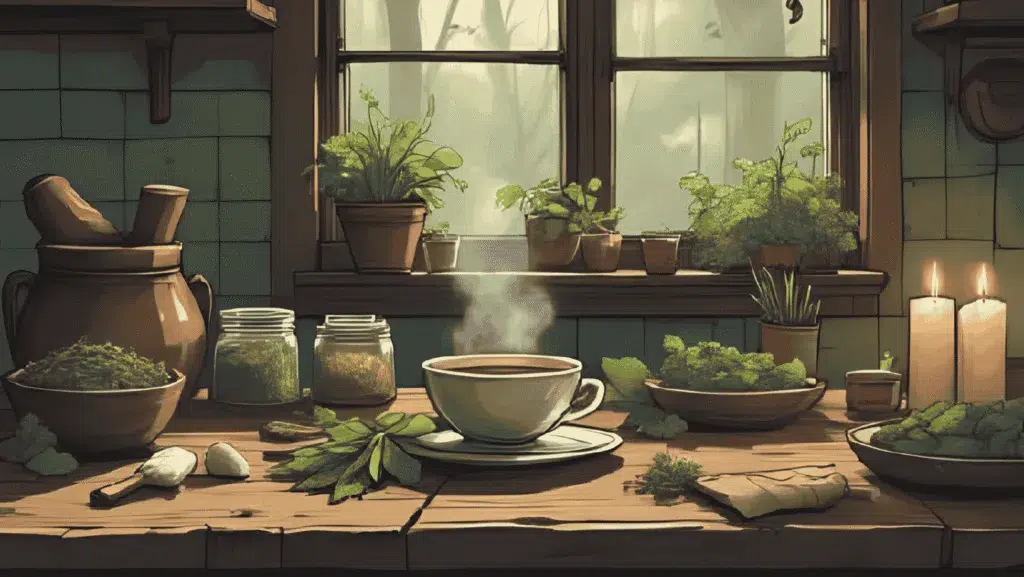
Kitchen Witchery at Its Finest
This is where bay really shines for me.
Because bay is proper everyday magic.
Not expensive crystal-grid-under-the-full-moon Instagram magic.
Real-life:
“I’m making soup because everyone’s stressed and tired and the weather’s disgusting” magic.
Adding bay to food with intention is one of the oldest forms of folk witchcraft there is.
While cooking you can quietly stir in intentions for:
- strength
- comfort
- healing
- protection
- peace
- emotional warmth
- family stability
Nobody even has to know you’re doing it.
That’s the beauty of kitchen magic.
It slips into ordinary life without fuss.
Bay for Coughs, Colds & Winter Misery
Historically, bay was used heavily during winter illness.
People used:
- bay steam inhalations
- infused oils
- herbal broths
- warming teas
- chest poultices
Modern science tells us bay contains compounds like cineole, which also appears in eucalyptus.
So those old steam remedies genuinely may help clear congestion and soothe breathing a bit.
And honestly?
Even if part of the comfort is psychological, that still matters.
Being cared for matters.
Warmth matters.
Ritual matters.
Humans heal better when we feel safe and comforted.
Bay for Emotional Healing Too
This matters just as much.
Historically herbs weren’t divided into:
- physical healing
- emotional healing
- spiritual healing
It was all connected.
And honestly?
It still is.
Bay works beautifully in rituals for:
- emotional resilience
- releasing stress
- restoring confidence
- grounding after difficult periods
- protection during burnout
- nervous system support
Because healing isn’t always dramatic.
Sometimes healing is:
- eating properly
- sleeping properly
- drinking something warm
- cleaning the kitchen
- crying a bit
- and slowly starting to feel like yourself again
That’s magic too.
Healing Magic with Bay
Simple ways to work with bay magically:
- add it to soups with protective intentions
- burn a leaf during healing rituals
- place bay beside a sickbed
- add bay to cleansing baths in a muslin bag
- combine with rosemary and chamomile for recovery work
- tuck bay into a healing sachet beneath a pillow
You do not need an elaborate ritual.
Sometimes a whispered:
“May this help.”
is enough.
What Science Says About Bay
Modern research has investigated compounds in bay, but evidence from laboratory or small studies should not be treated as proof that bay treats illness in people.
Bay contains compounds that have been studied for:
- antioxidant activity
- anti-inflammatory effects
- antimicrobial support
Now obviously:
a bay leaf is not a replacement for medical care.
Please still see actual doctors when needed.
The NHS is held together with caffeine and sheer stubbornness as it is.
Culinary and ritual use can still be meaningful, but medicinal use deserves appropriate professional guidance.
And witches have historically understood that balance very well.
Important Safety Stuff
Because practical witchcraft matters.
A few things worth remembering:
- never eat whole bay leaves
- strain teas properly
- avoid strong medicinal use during pregnancy
- use caution with diabetes medication
- never ingest bay essential oil
- always use true culinary bay (Laurus nobilis)
Magic is not improved by accidental poisoning.
Let’s keep the vibe grounded.
Final Thoughts
What I love about bay is how beautifully ordinary it is.
A herb in the kitchen cupboard quietly carrying centuries of:
- healing
- protection
- nourishment
- comfort
- and folk wisdom
No flashy aesthetic.
No gatekeeping nonsense.
Just practical plant magic woven into everyday life.
And honestly?
That’s the kind of witchcraft I trust most.
The kind that feeds people.
Comforts people.
Supports people.
Protects people.
So next time you toss a bay leaf into soup, pause for a second.
Stir clockwise.
Whisper a little intention.
Feed the people you love.
That’s old magic.
And it still works beautifully.