The Lancs Green Witch
Samhain in Lancashire: Witch History and Modern Practice
Samhain feels different in Lancashire. Perhaps that is partly imagination. I grew up with Pendle Hill on the cultural horizon, in a county where the.
Samhain feels different in Lancashire.
Perhaps that is partly imagination. I grew up with Pendle Hill on the cultural horizon, in a county where the word witch is tied not only to modern Pagan practice but to real people accused, imprisoned, tried and executed in 1612.
By late October the landscape helps too.
The light disappears early. Leaves clog wet pavements. Fields empty. Mist settles into low ground. Rain arrives sideways because this is still Lancashire and apparently atmosphere must be delivered with weatherproof clothing.
It is easy to understand why Samhain feels at home here.
But celebrating Samhain in Lancashire also gives us a responsibility to separate modern witchcraft from the history of people persecuted under accusations of witchcraft.
Those stories can meet in the landscape without becoming the same story.
What Is Samhain?
Samhain is a Gaelic seasonal festival associated with the beginning of winter and the transition out of the harvest season.
Modern Pagan traditions commonly celebrate Samhain around 31 October and 1 November as one of the festivals on the Wheel of the Year.
For many contemporary witches and Pagans, themes include ancestors, remembrance, endings, death, divination and the turning towards the darker part of the year.
Modern Samhain practice varies enormously.
Some people honour deities.
Some work with ancestors.
Some hold formal ritual.
Some light a candle for people they miss and eat something seasonal.
There is no single universal modern Samhain ceremony.
Is Samhain the Same as Halloween?
No, although their dates and modern cultural expressions overlap.
Halloween has its own complicated development through Christian All Hallows traditions, folk customs and later popular culture, while Samhain has Gaelic seasonal roots and has been incorporated into modern Pagan religious and witchcraft practice.
Today people may celebrate one, both or neither.
You can carve pumpkins, hand sweets to children and also hold a quiet ancestor ritual later that evening.
The pumpkin does not invalidate the spirituality.
Neither does watching a horror film afterwards.
The Lancashire Witch Trials Are Not Samhain History
This distinction matters enormously.
The Pendle witch trials took place in 1612.
The accused were not a documented coven of modern-style witches celebrating the Wheel of the Year.
They lived in a period shaped by poverty, religious conflict, folk belief, healing practices, accusations of harmful magic and a legal system that prosecuted witchcraft.
The Lancashire witches belong to the history of witch trials and persecution, not to the historical origins of modern Samhain celebrations.
We can remember them at Samhain because the season invites remembrance of the dead.
But we should not rewrite their lives to make them look conveniently like us.
The Pendle Witches of 1612
The Pendle case is one of England’s most famous witch trials.
Twelve people were accused in connection with the Pendle cases. One, Elizabeth Southerns, known as Demdike, died while imprisoned before the main Lancaster trials. Eleven went to trial in the wider proceedings, with one tried at York. At Lancaster, ten associated defendants were tried and only one was acquitted.
The story survives in unusual detail partly because Thomas Potts, clerk of the court, published an account titled The Wonderfull Discoverie of Witches in the Countie of Lancaster.
That source is invaluable, but it is not a neutral modern transcript. It was produced within the legal, political and religious world that prosecuted the accused.
Lancaster Castle remains physically connected to this history. The Lancashire witches were imprisoned there awaiting trial, and the castle’s courtrooms witnessed the 1612 proceedings.
When you live locally, this history isn’t an abstract paragraph in a witchcraft book.
The places still exist.
Demdike, Chattox and the Device Family
Two elderly women sit at the centre of much of the Pendle story: Elizabeth Southerns, known as Demdike, and Anne Whittle, known as Chattox.
Both were associated in accusations and testimony with charms, healing, begging and harmful magic.
The Device family, including Alison Device, James Device and their mother Elizabeth Device, became central to the investigation.
One important moment occurred in March 1612 when Alison Device encountered pedlar John Law on the road near Colne. After he refused her request for pins, she reportedly cursed him, and he subsequently collapsed.
The investigation widened dramatically from there.
The resulting accusations pulled neighbours, family members and rival households into a process that would end at the gallows.
Jennet Device
One of the most disturbing aspects of the trials is the role of Jennet Device, a child of about nine years old, whose testimony was used against members of her own family and others.
Her evidence helped identify people accused of attending a gathering at Malkin Tower on Good Friday 1612.
It is easy, centuries later, to turn the story into gothic folklore.
But there were frightened human beings inside it.
Children.
Mothers.
Neighbours.
People living in poverty and uncertainty.
The story is fascinating precisely because it is complicated, not because it proves Lancashire was secretly full of modern witches.
Lancaster Castle and the Lancashire Witches
The accused were taken to Lancaster Castle, where they were imprisoned awaiting trial.
Lancashire County Council records that the castle’s courtrooms witnessed the trials of the Lancashire witches in 1612 and that the Well Tower was used to incarcerate them while they awaited proceedings.
For a modern Lancashire witch, the castle can be emotionally complicated.
It is heritage, architecture, law, punishment and memory layered together.
You can visit and feel connected to local witch history while still remembering that the people held there were prisoners, not characters in a seasonal attraction.
Remembering the Accused at Samhain
Samhain can be an appropriate time to remember people killed under witchcraft accusations, provided we do so without pretending they shared our modern identities.
Light a candle.
Read their names.
Learn the history.
Visit a local museum or historical site respectfully.
Support accurate interpretation of witch-trial history.
Think about what fear, poverty, misogyny, religious tension, community conflict and systems of power can do when accusations become evidence.
Remembrance does not require claiming them as spiritual ancestors.
Sometimes witnessing the history is enough.
Samhain and Ancestor Practice
For many modern witches, Samhain is associated with remembering ancestors and beloved dead.
Ancestor practice can be as simple as placing photographs on a shelf, cooking a family recipe or lighting a candle.
You might remember biological family.
Chosen family.
Friends.
Teachers.
Community figures.
People whose work shaped you.
There is no requirement to honour every ancestor equally.
Family histories contain difficult people as well as beloved ones.
You are allowed boundaries with the dead too.
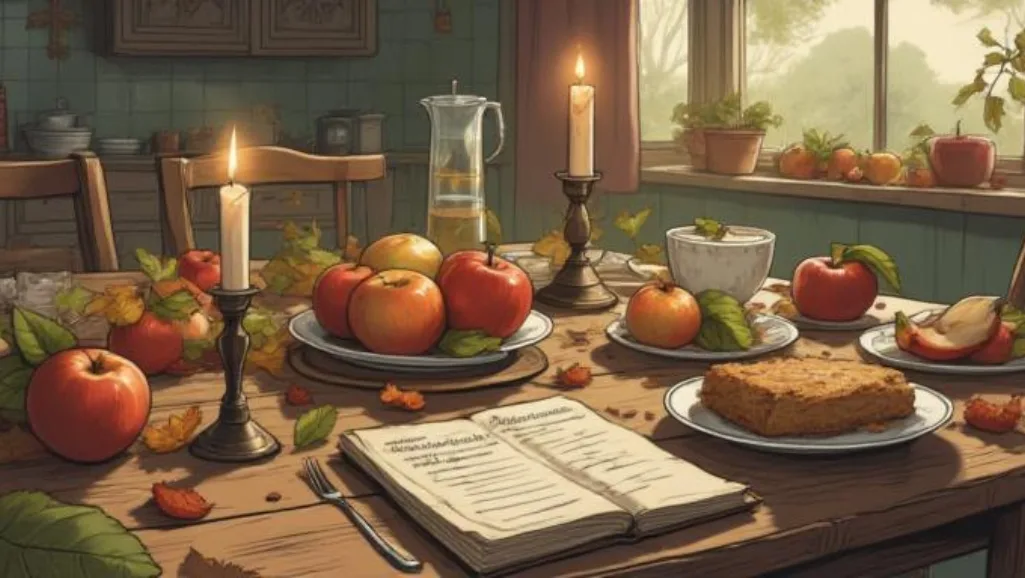
A Simple Samhain Ancestor Altar
Choose a small safe space.
Add photographs or names of people you want to remember.
Include a candle or LED light.
Place something connected with family or memory: jewellery, a recipe card, an inherited object or something symbolic.
You may add seasonal items such as apples, leaves or herbs.
Keep food offerings safe and dispose of them sensibly.
The altar does not need to look gothic.
It needs to mean something to you.
A Lancashire Samhain Altar
If you want the altar to connect with the local landscape, use seasonal materials gathered responsibly.
Fallen leaves.
Apples.
Hawthorn berries left on the branch where wildlife needs them rather than stripping a hedge for aesthetics.
A stone from your own garden.
A photograph of the local landscape.
Something representing Pendle, Lancaster or the place you call home.
Local practice is not about collecting bits of every historical site you visit.
Please leave archaeological, protected and private places exactly as you found them.
A Samhain Remembrance Ritual
Light a candle safely.
Name the people you are remembering.
You might say:
For those I knew and loved,
I remember you.
For those whose stories shaped this place,
I remember you.
For those whose names were distorted, forgotten or turned into legend,
may I meet your history with care.
Sit quietly for a few minutes.
Then extinguish the candle.
You do not need to attempt spirit communication for remembrance to be meaningful.
Divination at Samhain
Divination is common in modern Samhain practice.
Tarot, oracle cards, scrying and other forms of reflection can fit the seasonal themes of uncertainty and transition.
Keep questions focused on yourself rather than trying to force messages from deceased people.
Try:
What am I carrying into winter?
What is ready to end?
What deserves remembrance?
What needs protection during the darker months?
What wisdom from my past can support me now?
Tarot can offer symbolic reflection without claiming to prove contact with the dead.
Samhain Herbs
Herbs commonly used in modern Samhain and autumn witchcraft may include rosemary for remembrance and protection, mugwort for divination, garden sage for wisdom and cleansing, yarrow for boundaries and divination, and bay for protection and wishes.
Use correspondences according to your own practice.
Dried ritual herbs can be placed on altars, in sachets or around spellwork.
Do not assume herbs sold for ritual use are edible or suitable for tea.
And if you’re burning anything, ventilate properly and consider pets, children and other people in the household.
Samhain Food
Samhain can be marked through ordinary seasonal food.
Apples.
Root vegetables.
Bread.
Soup.
Baked dishes.
Family recipes.
Food connected with people you remember can be especially meaningful.
You do not need an historically reconstructed Celtic feast.
If your grandmother’s most memorable contribution to family cuisine was Lancashire hotpot, make the hotpot.
Memory is allowed to be local and personal.
Visiting Pendle at Samhain
Pendle Hill and the surrounding villages draw enormous interest because of the 1612 trials.
If you visit, remember that this is a real landscape where people live and work.
Stay on appropriate paths.
Respect private property.
Take litter home.
Do not remove objects from historical sites.
Do not leave candles, jars, salt, wax, ribbons, crystals or offerings in the landscape.
A meaningful spiritual visit should not create rubbish or hazards for somebody else to clear up.
The hill does not need your spell jar.
Samhain at Home in Lancashire
You do not need to travel anywhere.
Open the back door and notice the air.
Watch how early darkness arrives.
Cook something warm.
Light a candle for somebody you miss.
Read about local history.
Put the garden to bed.
Gather the last useful herbs.
Listen to rain against the window.
Samhain is a seasonal threshold, and thresholds happen in ordinary homes too.
Modern Witchcraft and Lancashire Identity
There is something powerful about practising witchcraft in a place with such a famous witch-trial history.
But I don’t think the power comes from pretending we are continuing an unbroken local witch tradition from 1612.
We aren’t.
Modern witchcraft has its own histories, influences and communities.
What we do have is landscape, folklore, local plants, family stories, historical records and the knowledge that the word witch has meant very different things in different centuries.
That complexity is more interesting than a neat invented lineage.
The Witch as Accusation and the Witch as Identity
For many people persecuted in early modern witch trials, witch was an accusation imposed upon them.
For many of us today, witch is a chosen identity.
That difference matters.
We can feel emotional connection with those histories without claiming sameness.
In fact, respecting the difference allows us to understand both more clearly.
The modern witch can stand in Lancashire and say:
This place shaped the history attached to the word I now choose for myself.
That is powerful enough without rewriting anybody else’s story.
A Samhain Reflection for Lancashire Witches
Ask:
What stories have shaped my understanding of witchcraft?
Which are history, which are folklore and which are modern practice?
What have I inherited from family or place?
What have I consciously chosen?
Whose stories deserve more careful attention?
What am I ready to carry into winter?
What can be left with the harvest season?
What does being a witch in this place mean to me now?
Samhain Doesn't Need to Be Spectacular
Samhain has become one of the most visually dramatic points on the modern witchcraft calendar.
Black candles.
Skulls.
Elaborate altars.
Ancestor feasts.
Costumes.
Pumpkins everywhere.
Enjoy all of that if you love it.
But a Lancashire Samhain can also be very quiet.
A wet evening.
A candle in the window.
A photograph on the mantelpiece.
A bowl of something warm.
A book about the people who lived here before us.
The dark arriving before tea.
The knowledge that winter is coming and the year is turning whether or not we decorate for it.
And perhaps that is where local witchcraft feels most real.
Not in pretending the past was something it wasn’t.
But in standing honestly in the same landscape, remembering carefully, and noticing what the season is doing now.
Handcrafted Tools