From The Grimoire
Eco-Friendly Witchcraft: Sustainable Tools and Herbs
Witchcraft can become surprisingly shopping-heavy. Start researching beginner supplies and within twenty minutes the internet may have convinced you.
Table of Contents
Witchcraft can become surprisingly shopping-heavy.
Start researching beginner supplies and within twenty minutes the internet may have convinced you that spiritual development requires twelve crystals, five types of incense, an engraved altar table, a moon-shaped shelf and approximately fourteen tiny glass jars.
It doesn’t.
A more sustainable witchcraft practice often starts with something beautifully unexciting:
Use what you already have.
That principle saves money, reduces waste and, rather wonderfully, brings witchcraft back towards relationship rather than consumption.
You Do Not Need to Buy a Witchcraft Practice
Tools can be useful and beautiful.
There is nothing wrong with buying something because it supports your practice or simply brings you joy.
The problem begins when buying becomes the practice.
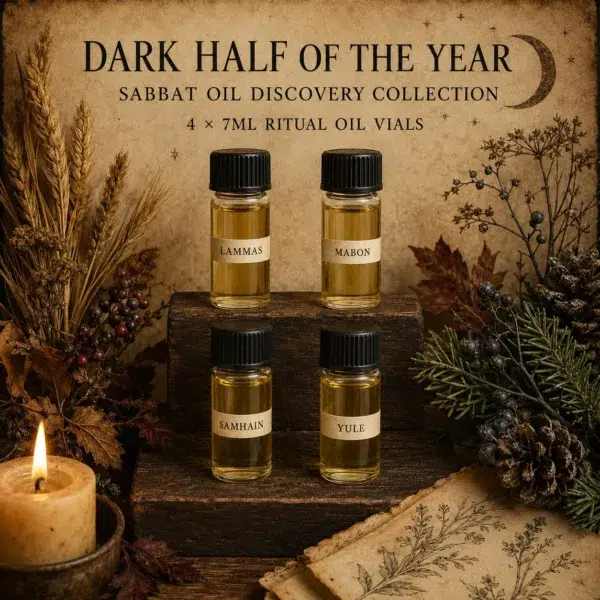
A new altar item for every Sabbat.
A crystal for every intention.
A different herb for every spell.
Seasonal decor replaced eight times a year.
Subscription boxes full of objects you would never have chosen individually.
Before buying, ask:
What will I actually do with this?
Do I already own something that serves the same purpose?
Would I still want it if nobody saw my altar?
That final question can be illuminating.
Start With the House
Look around your home before visiting a metaphysical shop.
Jam jars become spell jars.
Small bowls become offering dishes.
Ordinary candles become ritual candles.
A scarf can become an altar cloth.
A kitchen spoon can stir magical preparations.
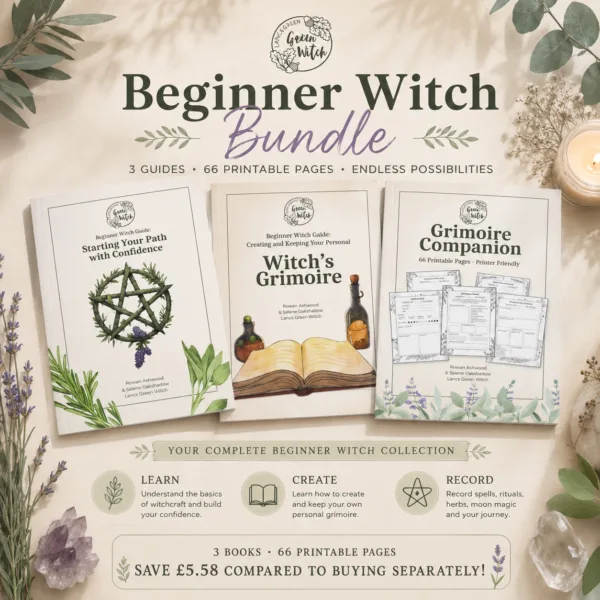
A notebook can become a grimoire.
A stone from the garden can represent earth.
A glass of water can represent water.
You probably own more potential witchcraft tools than you realise.
Second-Hand Witchcraft Tools
Charity shops, car-boot sales and second-hand marketplaces can be brilliant sources of altar tools.
Candle holders.
Brass dishes.
Wooden boxes.
Picture frames.
Baskets.
Jars.
Books.
Fabric.
Small shelves.
You may want to clean or cleanse second-hand items according to the material and your beliefs.
Physical cleaning comes first.
Do not put a wooden antique bowl under running water because somebody online said cleansing requires flowing water.
The object would probably prefer a cloth.
Sustainable Altars
An altar does not need constant seasonal replacement.
Keep a stable foundation and change a few small elements through the year.
A branch.
Seasonal flowers.
A photograph.
One candle colour.
A bowl of conkers.
An apple at Mabon.
Evergreen at Yule.
The altar can change because the landscape changes rather than because you’ve bought a new themed collection.
Local Materials
Working with materials from the place where you live can deepen green witchcraft while reducing reliance on imported supplies.
Fallen leaves.
Feathers where lawful and appropriate to possess.
Stones.
Twigs.
Seeds.
Garden herbs.
Local flowers.
Rainwater for ritual use.
But local does not mean take whatever you want.
Respect land ownership, wildlife, protected species and local regulations.
Take only small amounts where gathering is permitted.
Never damage a living plant unnecessarily because you wanted the aesthetically perfect branch.
The tree was using that.
Foraging Is Not Automatically Sustainable
Wild harvesting has become fashionable, but popularity can place pressure on habitats.
Correct identification matters.
So does knowing whether collection is legal, safe and ecologically responsible in that location.
For beginners, growing common magical herbs or buying them from responsible suppliers may be far more sustainable than harvesting wild plants you cannot confidently identify.
You do not become a greener witch by accidentally uprooting something rare.
Grow the Herbs You Actually Use
If you have space, start with one or two herbs you regularly use.
Rosemary.
Lavender.
Mint in a pot because mint has expansion plans.
Garden sage.
Basil if you and basil have a more functional relationship than I do.
Growing your own creates direct knowledge of the plant.
You notice when it grows, flowers, needs pruning and responds to weather.
That relationship can become more spiritually meaningful than owning twenty packets of dried herbs you barely recognise.
But You Don't Have to Grow Everything
Gardening requires space, time, mobility and energy.
Not everybody has those resources.
Buying herbs is not a spiritual failure.
Choose what works for your actual life.
A small packet used thoughtfully may be less wasteful than growing six plants you cannot maintain.
Sustainability should not become another form of witchcraft gatekeeping.
Buying Dried Herbs More Thoughtfully
Buy quantities you are likely to use.
A beginner rarely needs 500g of mugwort.
Small packets reduce waste and allow you to learn what genuinely belongs in your practice.
Store herbs properly.
Label them.
Keep them dry and away from conditions that degrade them.
Use older herbs for non-consumable ritual purposes where appropriate rather than automatically throwing them away because their colour faded slightly.
And remember that ritual herbs are not automatically food grade.
Sustainable does not mean eating the spell supplies to avoid waste.
Use Common Herbs
Common plants are often magically versatile.
Rosemary can cover protection, cleansing and remembrance.
Bay works around wishes, success and protection.
Lavender suits peace, love and cleansing.
Basil supports prosperity, success and protection.
You do not need a rare botanical for every intention.
The rosemary plant does not become less magical because it is available in Tesco.
Choose Versatile Tools
If you are buying tools, favour things that can serve several purposes.
A plain fireproof dish can hold candles, incense or ritual papers where appropriate.
A simple cloth can become an altar cloth for many seasons.
Clear quartz can be used broadly within modern crystal practice if crystals are part of your craft.
A neutral candle can suit many intentions.
A small set of versatile tools usually gets used more than a huge specialist collection.
Candles and Waste
Candles create containers, packaging and leftover wax.
Use them deliberately rather than lighting five because a spell photograph looked nice.
Choose sizes appropriate to the ritual.
A tealight may be perfect for a short working.
Reuse suitable candle jars after cleaning them properly.
Use leftover wax safely if you already make candles and understand the materials involved.
Never compromise fire safety to avoid wasting a tiny amount of wax.
Sustainability includes not setting the house on fire.
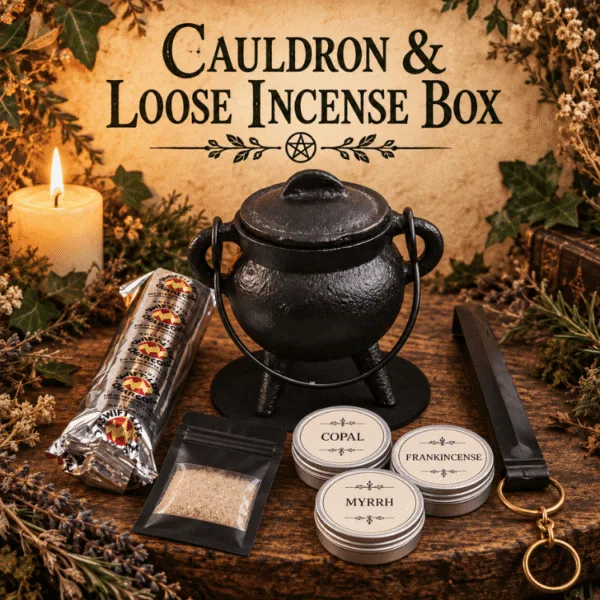
Incense and Smoke
Incense materials can involve complex supply chains, and some aromatic woods and resins face sustainability concerns depending on species and sourcing.
You do not need exotic smoke for cleansing.
Try sound, visualisation, sweeping, opening windows, a suitable room spray or locally grown herbs used appropriately.
If you buy incense, look for suppliers who can tell you what the material actually is and where possible how it was sourced.
And consider the humans and animals breathing the smoke in your home.
The eco-friendly option is not automatically the one that produces the biggest mystical cloud.
Crystals and Sustainability
Crystals are mined materials.
Mining can involve environmental damage and difficult labour conditions, while supply chains are often opaque.
You do not have to abandon crystal practice if it matters to you.
Buy fewer stones.
Choose pieces you will actually use.
Ask suppliers about sourcing where information is available.
Consider second-hand crystals.
Swap with friends.
Use ordinary local stones for practices that do not require a particular mineral.
A £2 tumble stone is still a rock. A £70 tower is also still a rock, just one with excellent marketing and rent to pay.
Do Not Throw Natural Materials Everywhere
The phrase return it to nature sounds lovely until nature is receiving candle wax, salt, glitter, ribbons, synthetic fabric and jars.
Do not bury spell remains simply because they were part of a ritual.
Dispose of materials according to what they physically are.
Paper may be recyclable depending on what is on it.
Plant material may be compostable if it is safe and free from unsuitable additions.
Salt should not be scattered over soil.
Wax belongs in appropriate household disposal or reuse systems, not woodland.
Glass jars do not decompose because you whispered an intention into them.
Biodegradable Does Not Mean Leave It Outside
Even natural materials can affect habitats.
Food offerings may attract animals, introduce unsuitable foods or create litter.
Large amounts of herbs or flowers can alter soil conditions.
Fruit left at a public beauty spot is still somebody else’s decomposing fruit problem.
If you make outdoor offerings, consider symbolic actions that leave no trace.
A spoken blessing.
Song.
Picking up litter.
Watering a plant where appropriate.
Time spent tending the place.
The land does not always need another object from us.
Eco-Friendly Offerings
An offering can be an action.
Volunteer.
Donate to a conservation group.
Feed garden birds appropriately.
Plant pollinator-friendly flowers.
Tend a neglected patch of garden.
Remove litter on a walk.
Learn the names of local plants.
Give time and attention.
Reciprocity can mean helping the living landscape rather than leaving something behind in it.
Packaging and Witchcraft Supplies
When choosing products, look at packaging as well as the contents.
Can the container be reused?
Is the refill available?
Is there unnecessary plastic?
Can you buy several items together rather than generating repeated postage and packaging?
But avoid perfectionism.
A product in plastic packaging that you use completely may be less wasteful than three aesthetically sustainable alternatives you bought and disliked.
Use matters.
Make Your Own, Sometimes
DIY can reduce waste when you already have the materials and skills.
Sachets.
Simple altar cloths.
Herb blends.
Candles if you safely understand candle making.
Seasonal decorations from reusable or responsibly gathered materials.
But homemade is not automatically more sustainable.
Buying twelve specialist ingredients to make one item can create more waste than buying the finished item you actually need.
Make things because making them adds value to your practice, not because every witch must become a miniature manufacturing department.
Reuse Spell Jars
Not every spell jar needs to remain sealed until the end of time.
When a working is complete, dismantle it if appropriate to your tradition.
Dispose of contents safely according to the actual materials.
Wash the jar.
Use it again.
The jar will cope emotionally.
Probably.
Digital Grimoires
A digital grimoire can reduce paper use and is easier to search, update and back up.
A physical notebook may last for years and require no electricity once made.
Neither is automatically morally superior.
Choose the format you genuinely use.
The most sustainable grimoire may simply be the one you do not replace every six months because a prettier notebook appeared.
Books and Libraries
Before buying every recommended witchcraft book, check your library.
Buy second-hand.
Borrow from friends.
Use reputable online archives for historical material where available.
Then buy the books you know you want to keep and return to.
A curated shelf is usually more useful than forty books purchased faster than you can read them.
Seasonal Decorations
Natural seasonal decorations can be beautiful, but reusable decorations are also sustainable.
Keep them.
Repair them.
Store them properly.
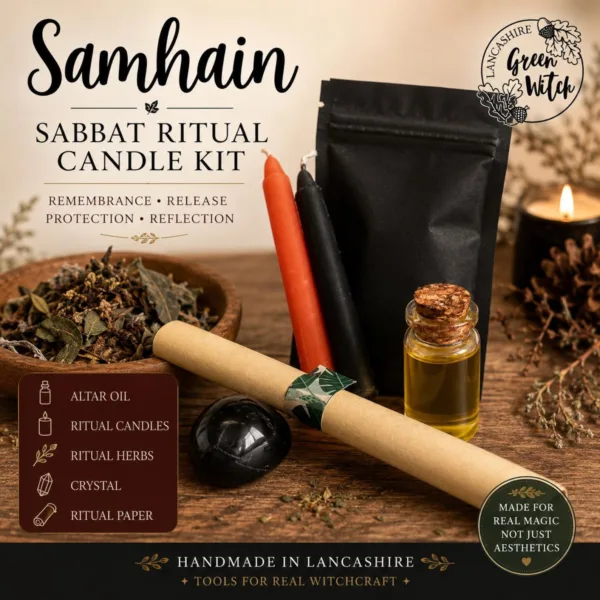
Use the same Samhain decorations next year.
The ancestors will not complain that they recognise the bunting.
At least none of mine have filed a formal report.
Avoid Spiritual FOMO
Limited edition Sabbat boxes.
New deck releases.
Seasonal crystal collections.
Exclusive altar tools.
Witchcraft exists inside consumer culture, so it receives the same pressure to keep buying as everything else.
Ask whether the item supports your practice or whether scarcity marketing has created urgency.
You are allowed to admire something without owning it.
This remains one of the most financially and environmentally sustainable magical skills available.
Support Small and Local Where You Can
Buying from a local maker or small business can reduce some supply-chain distance and support skills within your community, although small does not automatically guarantee sustainable sourcing.
Ask sensible questions.
What is handmade?
Where are ingredients sourced?
Can packaging be reused or recycled?
Do not expect a tiny business to provide a multinational corporation’s sustainability report for a £4 item.
Look for transparency and improvement rather than perfection.
Create a Sustainable Witchcraft Inventory
Once or twice a year, look at what you own.
What do you use regularly?
What has expired or degraded?
What could be reused?
What could be donated or passed on?
What are you repeatedly buying?
What have you never used?
This is particularly useful before seasonal shopping periods.
Apparently the presence of pumpkins can make us forget that we already own candle holders.
A Low-Waste Beginner Witch Kit
If starting from scratch, you could build a perfectly functional practice with:
One notebook or digital document.
A few ordinary candles.
One fireproof holder.
A small selection of versatile herbs.
A bowl.
A jar or two saved from food packaging.
One divination tool if you genuinely want one.
A couple of meaningful stones or crystals if they appeal to you.
Access to outdoor space, even if that means a local park rather than a private garden.
Everything else can develop slowly.
Sustainability Is a Practice, Not an Aesthetic
Eco-friendly witchcraft does not have to look beige, handmade and beautifully arranged beside a linen cloth.
It can look like a reused pasta sauce jar.
A second-hand candle holder.
The same tarot deck for ten years.
A battered notebook.
Rosemary from the supermarket.
A plastic storage box that you already own and keep using rather than replacing with a prettier wooden one.
The goal is reducing unnecessary consumption and treating materials with respect, not performing an environmentally themed aesthetic.
Buy Less. Learn More. Use Things Properly.
That is the heart of sustainable witchcraft.
Know the herbs you keep.
Use the tools you buy.
Repair things.
Reuse containers.
Borrow books.
Grow what suits your life.
Gather responsibly.
Leave wild places as you found them, or better.
Question anything marketed as essential.
And remember that witches practised with the materials around them long before next-day delivery existed.
Your craft does not become more authentic because you own more objects.
Sometimes the greenest magical tool is the one already sitting in the kitchen drawer.
Handcrafted Tools