From The Grimoire
Celtic Witchcraft for Beginners: A Respectful Guide
A grounded beginner guide to Celtic witchcraft: what the modern term means, how to avoid historical myths and how to begin with care.
Table of Contents

Celtic witchcraft is a modern umbrella term for spiritual or magical practices inspired by Celtic cultures, folklore, languages and landscapes. It is not one ancient religion with a single surviving rulebook, and it does not mean the same thing to everyone who uses it.
That is not a problem. A modern practice can still be sincere and meaningful. The key is to be honest about what is historical, what is regional and what is your own contemporary interpretation.
This is a calm place to begin—without pretending that every leaf, rune or ritual on the internet has an unbroken ancient Celtic pedigree.
What Does ‘Celtic Witchcraft’ Mean?
People who call themselves Celtic witches are usually drawing inspiration from the myths, folklore, seasonal customs, languages and places associated with Celtic cultures. Some focus on Irish tradition, Scottish Gaelic heritage, Wales, Cornwall, the Isle of Man or Brittany. Others use the phrase more broadly for a nature-centred practice with Celtic influences.
Those are not all the same thing. “Celtic” can describe a family of related languages and cultures, not one uniform people with identical beliefs. A story from Ireland, a Welsh festival custom and a Scottish Gaelic prayer do not become interchangeable just because a modern book places them on the same mood board.
Use the term as a direction for learning, rather than as a shortcut that makes all of Britain and Ireland feel like one big mythical village.
A Note on History: Be Wary of ‘Ancient Secrets’
We do not have a complete, first-hand manual of ancient Celtic religion or witchcraft. What survives comes from archaeology, place names, later manuscripts, folklore and accounts written by people with their own agendas. Historians can tell us useful things, but there are also real gaps.
That means claims such as “the ancient Celts always used this herb for exactly this spell” need a healthy raised eyebrow. Modern practices inspired by the past are not fake; they simply need to be named honestly as modern interpretations, reconstructions or personal practice.
Good research makes magic richer. You do not have to pretend to know more than the evidence can support.
Regional Traditions Matter
If you are drawn to Celtic witchcraft, choose one region or strand to begin with rather than treating “Celtic” as one giant pick-and-mix. Read Irish material as Irish material. Learn about Wales through Welsh voices. Notice whether a source is discussing Scottish Gaelic, Cornish, Manx or Breton culture rather than using vague, floaty language.
This does not mean you need a bloodline test before you are allowed to learn. It means you treat living cultures and their histories with respect. Learn the names of places correctly, look for regional writers and be cautious of sources that reduce whole cultures to tartan, triskeles and “warrior spirit”.
Specificity is a form of care.
Celtic Witchcraft, Druidry and Paganism
Celtic witchcraft may overlap with modern Paganism or Druidry, but the words are not interchangeable. Druidry is a group of modern traditions with its own history and approaches. Paganism is a broad umbrella term. Witchcraft describes a practice, and a person can practise it within many different beliefs—or none at all.
Some people are eclectic witches who draw from Celtic sources alongside other open practices. Others prefer a reconstructionist approach, which tries to build carefully from historical and cultural evidence. Neither needs to pretend to be a carbon copy of the past.
Our Beginner Pagan guide can help if you are still getting to grips with those larger labels.
Begin with Place, Not a Shopping List
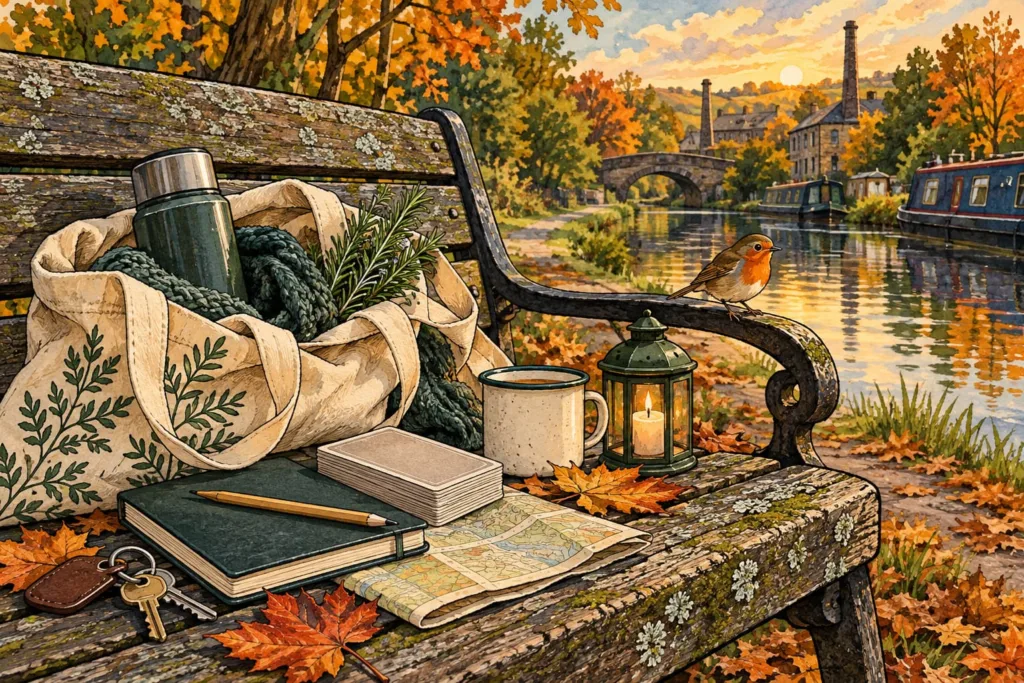
A gentle way into this path is to begin where you actually live. Notice the trees, birds, weather, field edges, coastlines, pavements and seasons around you. Learn the history of your local area: what came before the houses, which industries shaped it, what stories people still tell.
You do not need to live in a postcard glen or own a dramatic cloak to make a practice feel rooted. A walk by your usual route, a note about the changing light or a cup of tea by the window can be a more honest beginning than a pile of things bought because they looked “Celtic”.
Magic grows stronger when it is connected to your real life and your actual place in the world.
A Simple Practice for Your First Month
For one month, choose a small practice you can repeat:
- go outside once a week and notice one seasonal change
- learn the name of one local plant, bird, hill, river or neighbourhood history—without assuming it is ancient or magical
- write a short reflection on what the place teaches you about patience, change or belonging
- choose one practical action that cares for your home, community or environment
This is not a lost Celtic rite. It is a modern, respectful practice of attention—and that is completely enough.
Learn from Stories Without Treating Them as Instructions
Myth and folklore can be beautiful companions for a witchcraft practice. Read the stories, learn who collected or translated them, and remember that a story may have many versions. A tale is not automatically a spell, a deity profile or a personality test.
Let stories raise questions. What values does this tale hold? How has it changed over time? Whose voice is missing from the version I have read? Taking myth seriously means allowing it to be complex.
Whenever possible, seek books and teachers who name their sources, translators and regions. “Ancient Celtic legend says…” is not enough information to build a trustworthy practice on.
Avoid a One-Size-Fits-All Correspondence Chart
It is tempting to search for a definitive list of Celtic herbs, Celtic colours, Celtic gods or Celtic symbols. The trouble is that those lists often merge different regions, time periods and modern inventions into one neat graphic.
You can still work with herbs, stones, symbols and seasonal ritual. Just describe your choices honestly. You might say, “I use rosemary because it helps me focus,” or “this knot pattern reminds me of a story I am studying,” rather than claiming that every object came from a universal Celtic system.
Your practice does not become less meaningful because you have stopped making up ancient footnotes for it.
Keep It Respectful and Open-Hearted
Celtic culture is sometimes used in romantic or nationalist ways that flatten real people into an imagined pure past. Steer well clear of anyone using “Celtic heritage” to make exclusionary claims about who belongs, who can learn or who is more spiritually authentic.
You can appreciate a culture without claiming ownership of it. Be clear about your own relationship to a practice, credit your sources and do not borrow sacred language, deities or customs out of context just to make your ritual sound more impressive.
A practice rooted in curiosity and humility will serve you far better than one built from certainty and borrowed authority.
Let Your Practice Be Modern and Honest
You are allowed to create a modern practice inspired by Celtic sources. You are allowed to call it Celtic-inspired, eclectic or simply your own. You are also allowed to change your mind as you learn more.
There is no need to rush into a label or recreate an ancient past you cannot fully know. Begin with careful reading, local connection and a willingness to say, “I do not know yet.” That is not a weakness; it is the start of wisdom.
If you are new to practical witchcraft as well as the history, Where to Start with Witchcraft is a useful gentle next step.
Root Your Craft in Care
Celtic witchcraft for beginners is not about collecting symbols or claiming a mysterious ancestral past. It is about learning thoughtfully, noticing the world around you and building a practice that is both meaningful and truthful about its roots.
And if you are worried that you are not doing any of it perfectly, you can read this reassurance for beginner witches. Slow, careful learning is a perfectly good form of magic.
Handcrafted Tools