Skip to content

5/5 based on 160+ sales on Etsy

The Lancs Green Witch

Why Every Kitchen Witch Needs a Winter Remedy Shelf

Discover five witchy cold remedies that blend herbal healing with magical intentions, soothing body and spirit during cold season. Cold Remedy.
Herbal Magic

Table of Contents

There comes a point every winter where even the strongest witch in the house starts looking slightly haunted.

Not metaphorically.
I mean genuinely pale, wrapped in a blanket, surviving entirely on tea and spite while somebody in the background coughs like a Victorian orphan.

In our house, winter illness arrives like an annual group project nobody agreed to participate in.

One kid gets the sniffles.
Then another develops a cough that sounds medically impossible.
Then somebody’s got sinus pressure.
Then Mark starts insisting he’s “dying” because he’s got a mild cold and suddenly requires the level of care usually reserved for wounded medieval kings.

And somewhere in the middle of all this chaos, I become what I can only describe as a slightly feral hedge witch pharmacist.

That’s when the winter remedy shelf earns its place.

Not because I think herbs magically replace medicine.
Not because I believe thyme can cure the Black Death.
Not because I’m about to start waving onions around chanting at influenza.

But because there is deep, old, practical magic in being prepared.

And honestly? Every kitchen witch deserves that kind of comfort.


The Remedy Shelf Isn’t About Perfection

I think people imagine kitchen witchery looking impossibly aesthetic.

Perfect glass jars.
Perfect labels.
Fresh herbs hanging from reclaimed oak beams while moonlight pours artistically through the window.

Meanwhile my actual remedy shelf contains:

  • half-used herbal tea packets
  • three jars with labels falling off
  • ginger root slowly attempting to become sentient
  • a bottle of honey somebody put back sticky
  • at least one mystery herb I forgot to label properly in 2024

And yet…
that shelf gets us through winter every single year.

That’s the thing about real folk magic.
It’s practical before it’s pretty.

Historically, that’s exactly what herbal remedy shelves were for.

People across Britain kept winter herbs close because winter was hard. Long before pharmacies existed, households relied on dried herbs, infused honeys, teas, syrups, vinegars, and warming broths to manage coughs, digestion, sleep, anxiety, fevers, and exhaustion.

Most of that knowledge lived in kitchens.
Usually carried by women.
Usually passed quietly between generations.

That’s witchcraft too, whether history called it that or not.


Winter Changes Everything

Summer witchcraft feels expansive.

Winter witchcraft feels protective.

The energy shifts completely once the dark evenings settle in properly. Your body changes with the season whether you like it or not. You sleep differently. Your mood changes. Your energy drops. Your immune system gets battered by cold weather, stress, school germs, and the fact Britain apparently believes central heating should be treated like a luxury item now.

This is where the remedy shelf becomes less about “healing” and more about support.

A winter remedy shelf says:
“I know difficult days are coming, and I deserve care when they arrive.”

Honestly, that alone feels quietly radical sometimes.


What Actually Lives on a Kitchen Witch’s Remedy Shelf?

Not dragon tears.
Not eye of newt.
Not suspicious Etsy moon dust sold by somebody called Raven Moonblood.

Realistically?

Things that genuinely help.

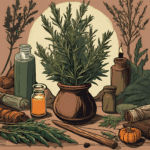
In ours, you’ll usually find:

  • Thyme for coughs and chesty nonsense
  • Ginger for nausea, circulation, and warming up after freezing school runs
  • Honey for sore throats
  • Lemon balm for stress and anxiety
  • Chamomile for sleep
  • Peppermint for headaches and blocked sinuses
  • Eucalyptus for steam bowls when everybody’s congested
  • Rosemary for literally everything because rosemary refuses to mind its own business

And honestly?
Most of these herbs are backed by generations of traditional use alongside growing scientific interest in herbal support for mild everyday symptoms.

Not miracle cures.
Not magical replacements for doctors.
Just solid, comforting support.

Which is exactly what folk remedies were always meant to be.


The Magic Lives in the Care

This is the bit people miss.

The power of kitchen witchery isn’t just in the ingredients.

It’s in the tending.

Boiling the kettle for someone.
Making the tea.
Remembering which child hates peppermint.
Adding honey because somebody sounds rough.
Lighting a candle because the kitchen feels cold and miserable and everybody’s exhausted.

That’s magic.

Not dramatic fantasy magic.
Not TikTok performance magic.

Real hearth magic.

The kind rooted in care, repetition, warmth, and survival.

Honestly, some nights the most powerful spell in the house is just:
“Sit down. Drink this while it’s hot.”


Every Witch Needs a “Rough as Fuck” Tea

You know the one.

The emergency blend.

The tea you make when your throat feels like broken glass and your nervous system’s dangling by a thread.

Mine usually contains:

  • thyme
  • ginger
  • honey
  • lemon
  • whatever emotional stability I can scrape together from the depths of my soul

Does it cure illness instantly?
No.

Does it help?
Absolutely.

And there’s something psychologically powerful about participating in your own care instead of just passively suffering through illness.

Modern research around comfort rituals, warm fluids, rest, and stress reduction genuinely supports what folk healers always understood:
care matters.

The body responds to warmth.
The nervous system responds to safety.
And healing happens better when we stop treating ourselves like malfunctioning machinery.


Your Remedy Shelf Should Feel Like Reassurance

That’s the real goal.

Not aesthetic perfection.
Not encyclopaedic herbal knowledge.
Not becoming the village bog witch who frightens Tesco delivery drivers.

Just reassurance.

A shelf that quietly says:
“We’ve got what we need.”
“We know how to care for ourselves.”
“We can soften hard days a little.”

Especially in winter.

Especially when the world feels cold and exhausting and everyone’s running on low battery.


A Tiny Bit of Common Sense From Your Lancashire Hedge Witch

Herbs are supportive.
Rest is supportive.
Tea is supportive.

But if symptoms are severe, worsening, involve breathing problems, chest pain, high fever, or anything worrying, please go see an actual medical professional instead of trying to battle pneumonia with chamomile and vibes.

There is absolutely no contradiction between witchcraft and modern medicine.

Honestly, most witches I know are fully capable of:

  • making thyme tea
    AND
  • taking antibiotics when needed

Balance, lovely.


From One Winter Witch to Another

A winter remedy shelf isn’t really about herbs.

Not entirely.

It’s about creating a home that knows how to soften difficult moments.

It’s about warmth.
Preparedness.
Care.
Comfort.
Gentleness.

It’s about understanding that healing doesn’t always arrive dramatically.

Sometimes it arrives quietly:
in steam rising from a mug,
in honey stirred into tea,
in rosemary hanging by the stove,
in somebody asking:
“Have you actually rested today?”

That’s the kind of magic that survives winter.

And honestly?
That’s the kind worth keeping.

Handcrafted Tools

More from The Grimoire

Make a Basil Tincture: Flat lay of basil tincture jar, fresh basil leaves, and herbal tools on a rustic wooden table

Make a Basil Tincture for Healing & Magical Use

Soothe a Cough Quickly: A steaming herbal tea with thyme and honey to soothe a cough quickly, surrounded by candles and witchy altar tools.

Soothe a Cough Quickly with Herbal & Witchy Remedies

Sleep & Relaxation Tea

How to use Sleep & Relaxation Tea for Deep, Restorative Rest

Elevate Your Energy with the Healing Light Tea

Elevate Your Energy with the Healing Light Tea

Remedy for Blocked Ears: A comforting witchy home remedy for blocked ears, with olive oil, herbs, and a cosy magical setup

Home Remedies for a Blocked Ear

0
    0
    Your Cart
    Your cart is emptyReturn to Shop